










Oakland and Berkeley: Where Art, Science and California’s Restless Spirit Meet
I traveled to Oakland for the 2026 Western Arts Alliance conference expecting several days centered on the business of entertainment. What I found was something far more interesting: a region that does not always reveal itself immediately, but rewards anyone curious enough to look beyond the obvious.
Oakland and Berkeley are not polished in the manner of cities that arrange themselves neatly for tourists. They are layered, complicated and sometimes visibly worn. Yet beneath that imperfect surface is an extraordinary concentration of creativity, intellectual achievement, activism and cultural history. This is a part of California that has questioned conventions for generations—and occasionally changed the world in the process.
The trip reminded me that a destination does not have to be immaculate to be important. Sometimes its value lies in the ideas it has produced, the voices it has amplified and the possibilities it continues to imagine.
The Western Arts Alliance Comes to Oakland
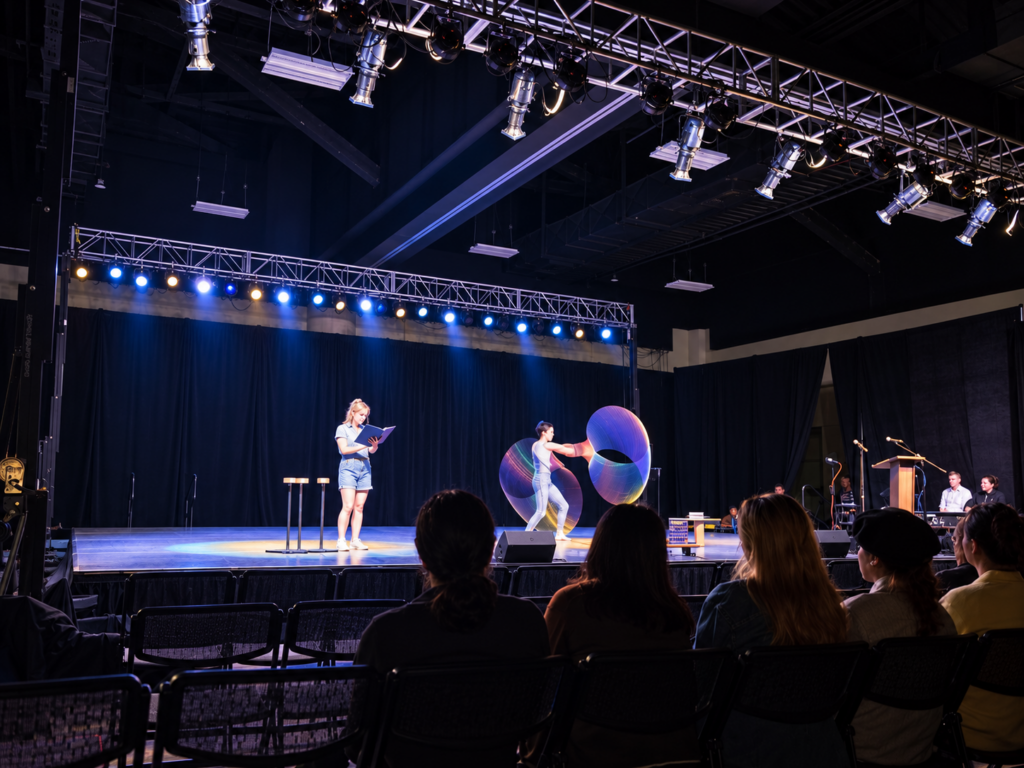
The Western Arts Alliance brought more than 600 performing-arts professionals to Oakland from September 8–11. Presenters, artists, agents, producers and cultural leaders gathered to exchange ideas, develop touring opportunities and consider the future of live performance. The official theme, “Circle Up,” felt especially appropriate in a field sustained by relationships and collective effort.
The conference headquarters at the Oakland Marriott City Center placed the gathering directly in the heart of downtown. The professional discussions mattered, but the performances supplied the electricity. Dance, music and theatrical showcases demonstrated why live art remains irreplaceable: it places artists and audiences in the same room, creating an energy that cannot be downloaded, automated or experienced quite the same way through a screen.
The range of talent was exhilarating. Tango brought elegance, precision and barely contained drama. The thunder of Japanese taiko drums was felt as much as heard, transforming rhythm into something physical and almost architectural. Mariachi filled the room with color, tradition and emotional immediacy. Different cultures, histories and artistic languages shared one stage—and somehow spoke beautifully to one another.
For someone whose work lives at the intersection of media, publicity and entertainment, it was an invaluable reminder: the arts are not ornamental. They generate conversation, preserve cultural memory and create connections between people who may otherwise have very little in common.
OMCA: California Without the Airbrushing
One of the great discoveries of my visit was the Oakland Museum of California—OMCA—a museum as intelligent as it is visually compelling.
OMCA brings California’s art, history and natural sciences together rather than isolating them in separate intellectual boxes. That interdisciplinary approach makes perfect sense. California cannot be explained through paintings alone, or politics alone, or geography alone. Its identity was shaped by landscape, migration, industry, protest, invention and cultural reinvention—all happening at once.
The building itself is part of the experience. Designed by Kevin Roche John Dinkeloo and Associates, with landscape architecture by Dan Kiley and gardens by Geraldine Knight Scott, the museum is a superb example of midcentury modernism. Terraces, broad stairways, planted courtyards and concrete structures flow into one another, softening the traditional boundary between museum and garden. Nature is not decorative here; it is incorporated into the architecture.
The result is a museum that encourages exploration rather than dictating a rigid route. You move between galleries and greenery, history and sunlight. It feels open, democratic and distinctly Californian.
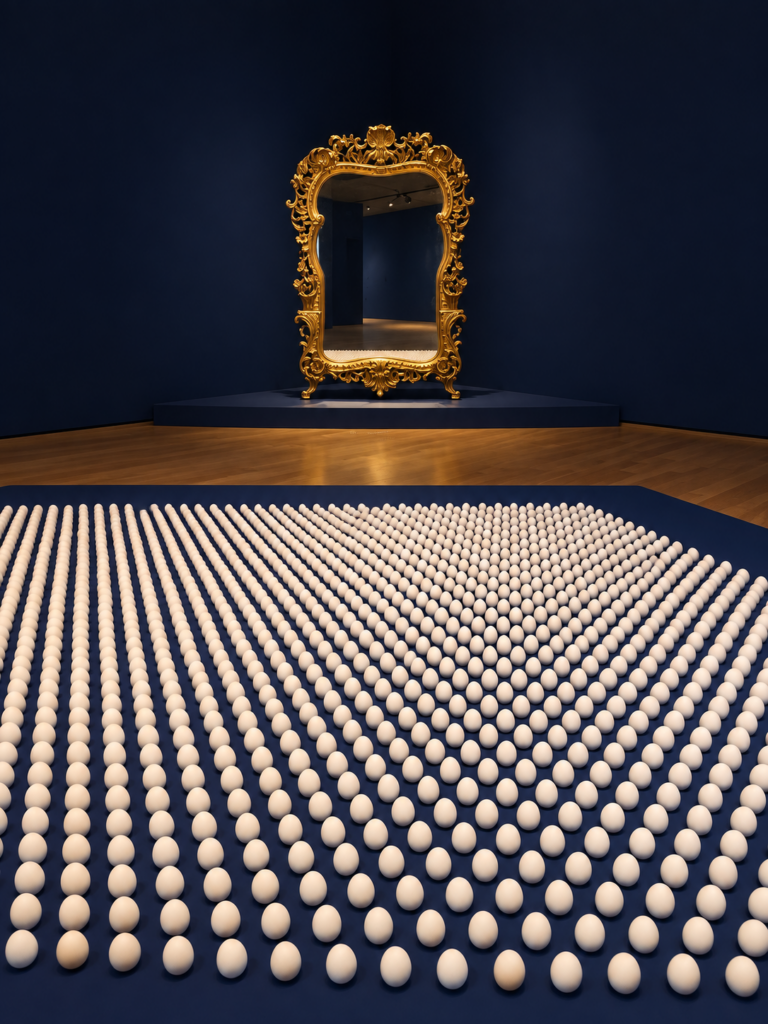
The exhibition Mildred Howard: Poetics of Memory was a particular highlight. Howard’s work draws upon personal memory, family history, identity, activism and the experiences of Black communities in the Bay Area. Her use of glass, photographs, ordinary objects and architectural forms transforms private history into something monumental.
There is beauty in the work, but it is not passive beauty. It asks who is remembered, whose stories become official history and what happens when an artist refuses to allow overlooked lives to disappear. The exhibition felt intimate and political, elegant and unsettling—all the more powerful because it did not separate those qualities.
OMCA does not present a sanitized California. It presents a state shaped by aspiration and contradiction, natural wonder and human struggle. It is a museum with a point of view, and thank goodness for that. California has never been a beige subject.
Berkeley: A Garden Above a Laboratory of Ideas
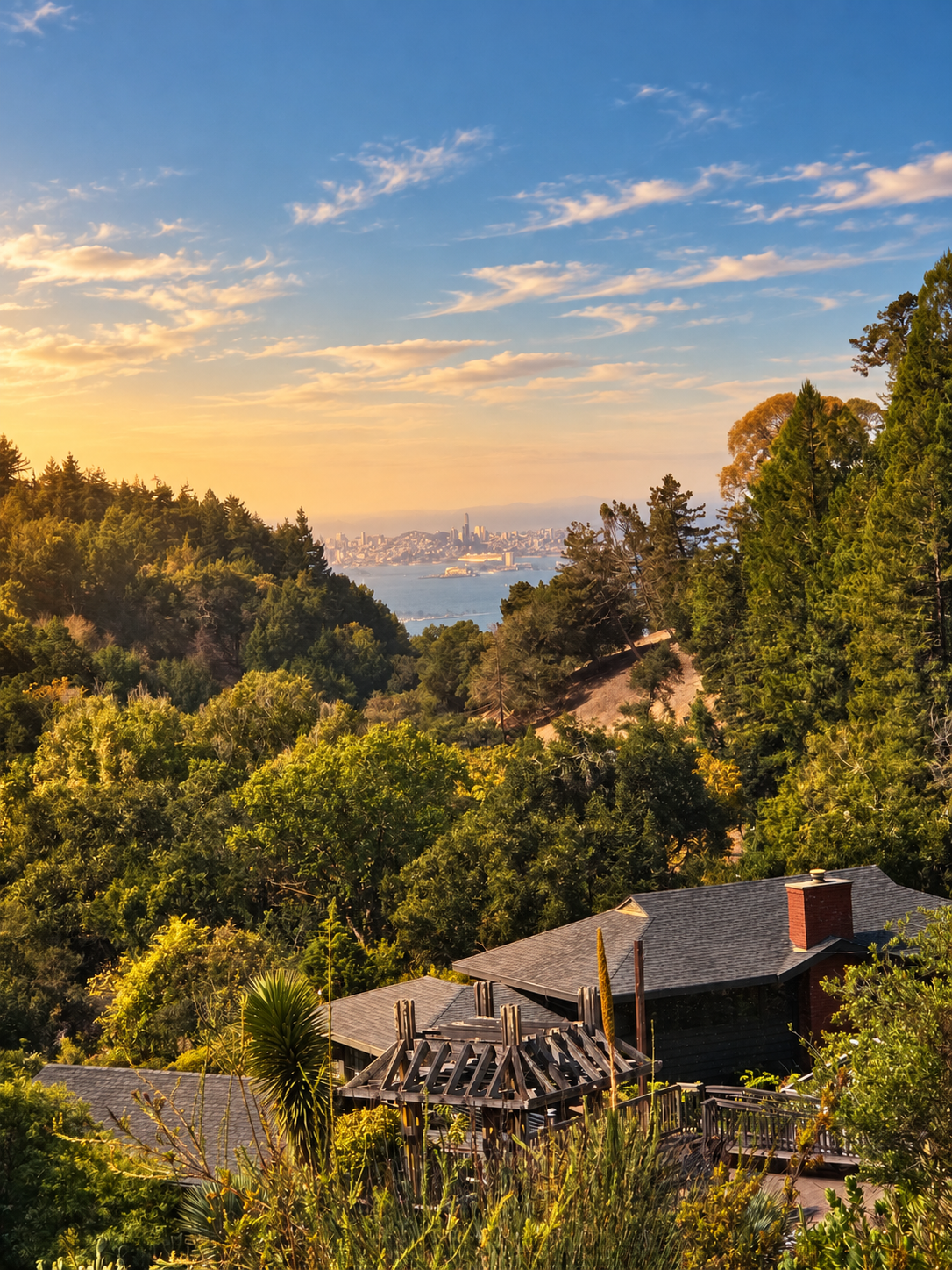
From Oakland, I traveled into the Berkeley Hills to visit the UC Botanical Garden at Berkeley. The journey upward gradually replaces urban density with winding roads, eucalyptus, open sky and magnificent views across the Bay.
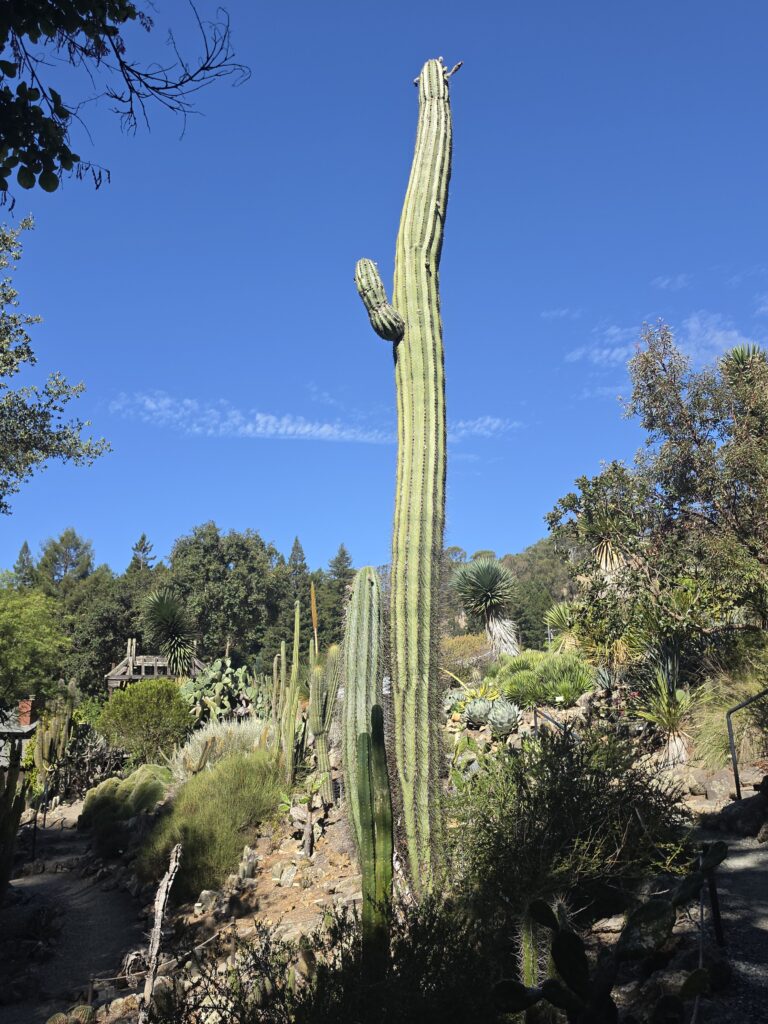
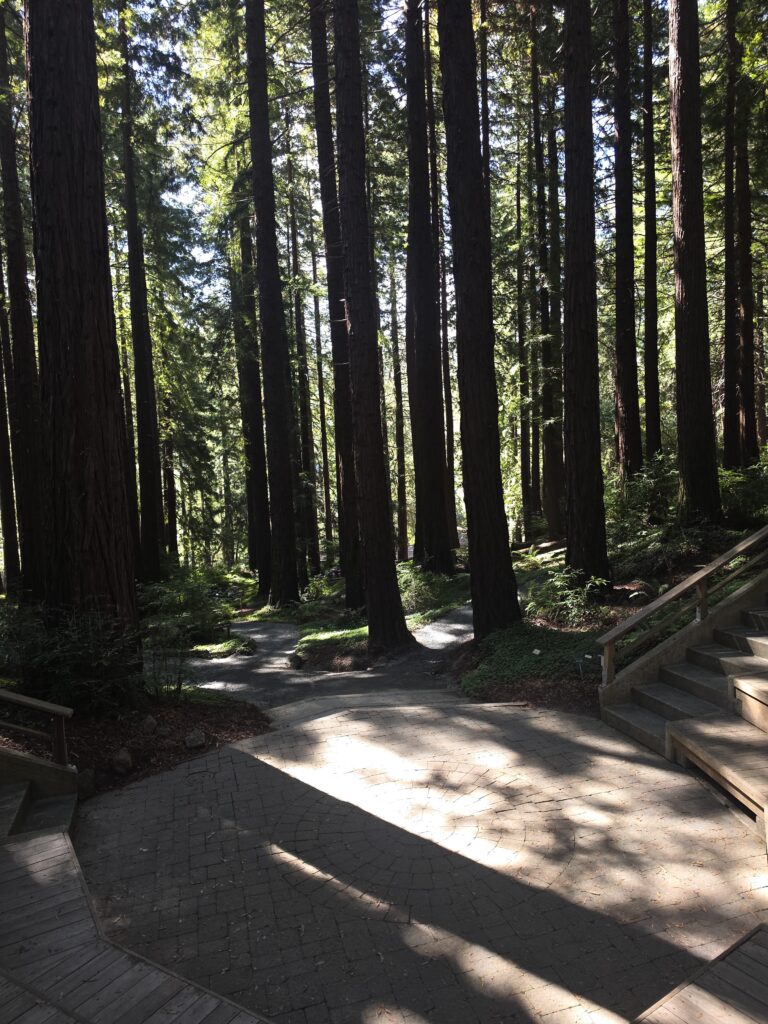
The 34-acre garden contains more than 10,000 kinds of plants, including rare and endangered species collected from regions around the world. Its landscapes move from California redwoods to Asian magnolias, Mediterranean plants, cloud-forest specimens and the dramatic forms of Southern African and desert flora.
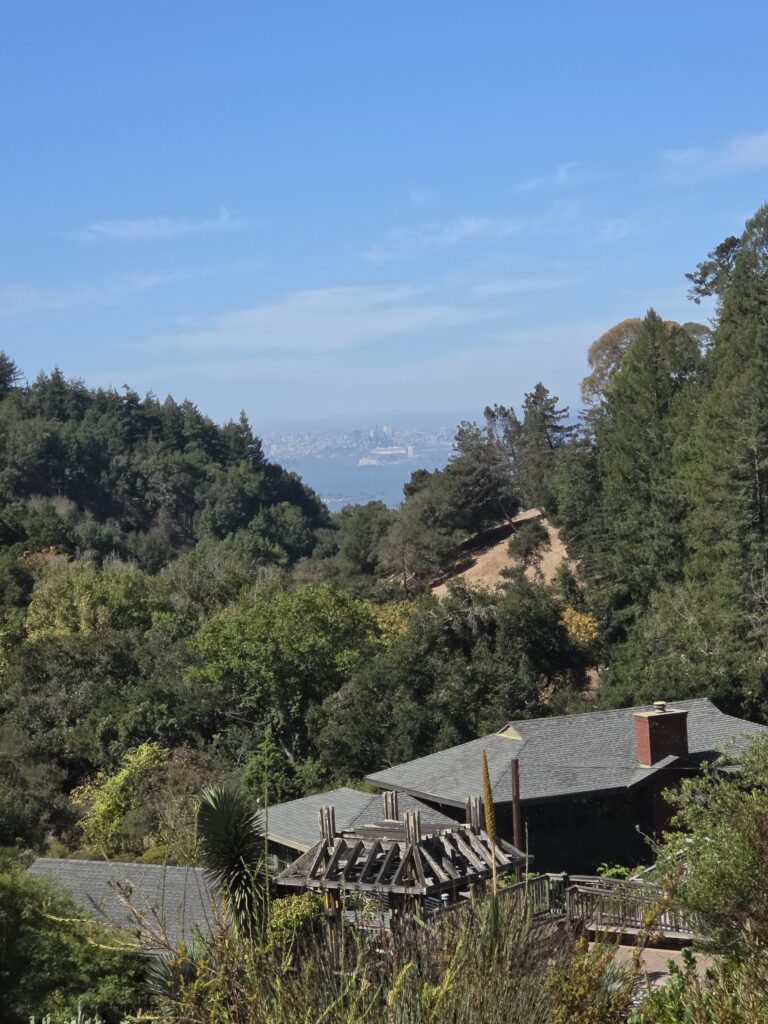
Yet this is far more than a beautiful garden. It is a living laboratory devoted to research, education and conservation. Every path offers another lesson in adaptation: plants surviving drought, altitude, heat, cold and centuries of environmental change. Wandering through it feels like traveling across continents without leaving the hillside.
There is also something poetic about its location. Below and around this peaceful sanctuary is one of the world’s great centers of scientific inquiry.
UC Berkeley’s influence on modern science is almost difficult to summarize. Physicist Ernest Lawrence invented the cyclotron there, helping open a new era in nuclear physics. Berkeley scientists and the affiliated radiation laboratory played central roles in identifying numerous chemical elements—including berkelium and californium, names that permanently placed the university and state on the periodic table.
More recently, Berkeley biochemist Jennifer Doudna shared the 2020 Nobel Prize in Chemistry with Emmanuelle Charpentier for the development of CRISPR-Cas9 genome editing. Their work gave science a revolutionary tool for altering DNA and opened possibilities across medicine, agriculture and biological research that would once have belonged to science fiction.
Berkeley’s contributions extend far beyond laboratories. The university and surrounding city have influenced literature, music, architecture, political thought, theater and the visual arts. The Free Speech Movement made Berkeley synonymous with public dissent. Its intellectual culture has repeatedly challenged accepted ideas—sometimes brilliantly, sometimes noisily, but rarely timidly.
If you do not agree with every political position associated with Berkeley, that is precisely why visiting mattered. Personal edification does not require ideological agreement. It requires curiosity. To understand American science, protest, culture and innovation, one should spend time in places where ideas have collided—and Berkeley is unquestionably one of them.
Looking Beyond First Impressions
Oakland and Berkeley can be visually surprising. Some areas appear older and less cared for than one might expect from a region associated with extraordinary wealth and technological advancement. The contrast between world-changing institutions and streets in need of investment is impossible to ignore.
But that contrast is also part of the story. These cities resist easy packaging. The greatness is not contained within a luxury district or a perfectly maintained façade. It lives in laboratories and gardens, on stages and museum walls, in community histories and arguments that have shaped national conversations.
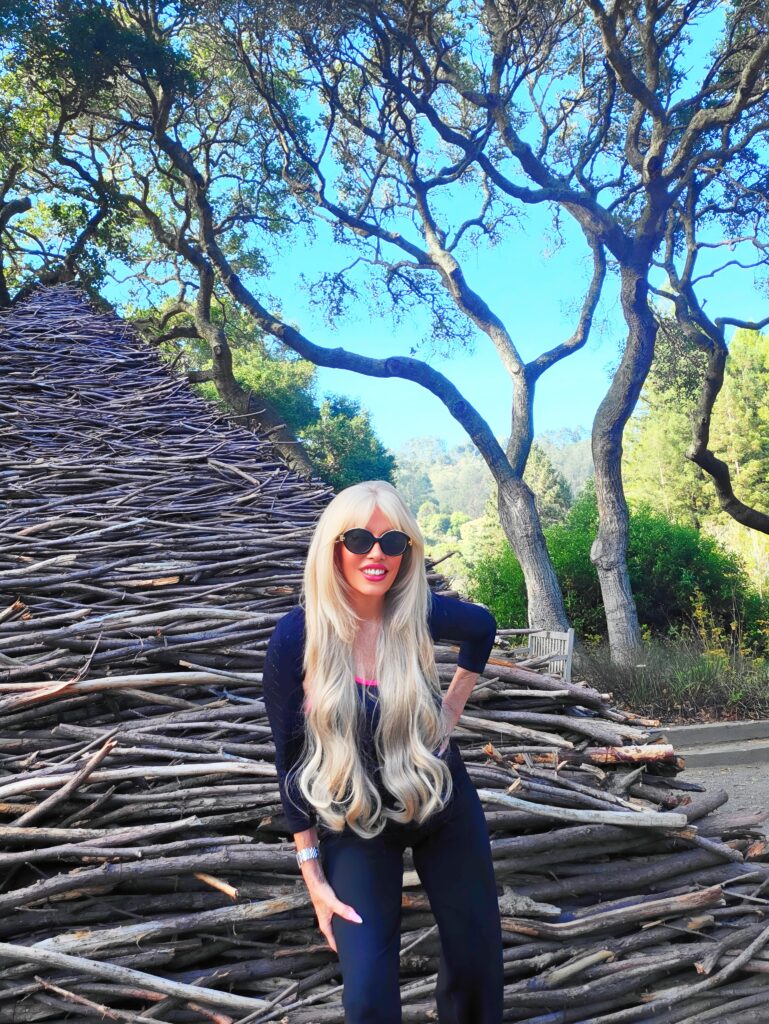
My Western Arts Alliance trip ultimately became more than a professional journey. It became an opportunity to look closely at a region I might not have explored on my own—and I am glad I did.
Oakland’s creative pulse was at the conference and inside OMCA. Berkeley’s scientific legacy is part of the history surrounding its university. Serenity was among thousands of plants high above the Bay. Most importantly, it is a reminder not to dismiss a place because it does not immediately present itself in glamorous wrapping.
Oakland and Berkeley do not ask to be admired superficially. They ask to be considered.
And once you begin to understand how profoundly this corner of California has influenced science, art, politics and performance, it becomes impossible not to recognize its importance. The buildings may sometimes look tired. The ideas most certainly are not.
Sources and Further Reading
- Western Arts Alliance: WAA OAK 2026
- UC Botanical Garden at Berkeley
- Oakland Museum of California
- UC Berkeley: Jennifer Doudna and CRISPR
- The Nobel Prize in Chemistry 2020