










San Francisco: Where Artificial Intelligence Competes With the Art of Being Human
I arrived in San Francisco hoping to immerse myself in a city celebrated for its vibrant arts, remarkable architecture and wonderfully unconventional cultural spirit. Instead, one of my first impressions was something far less romantic: enormous advertisements for artificial intelligence looming over the city.
They seemed to be everywhere—on buildings, billboards and screens—promising to revolutionize business, productivity and possibly life itself. Rather than feeling innovative, the relentless messaging began to feel strangely intrusive.
Technology has always been part of San Francisco’s identity, of course. But there is a difference between innovation contributing to a city and advertising completely overwhelming it. Against areas that already appear tired, neglected or economically strained, these glossy promises of an effortless AI-powered future can feel especially disconnected from the reality at street level.
I had come hoping to discover San Francisco’s creative soul. At times, it seemed as though I had entered a city-sized technology convention instead.
My response, therefore, was never anti-technology. It was a reaction to watching one powerful industry attempt to dominate the visual identity of a city whose history is far older, richer and more human than any algorithm.
San Francisco has never belonged to one kind of dreamer. It was shaped by prospectors chasing gold, immigrants arriving through its harbor, laborers building railroads, merchants opening neighborhood shops and families creating new lives along its steep and improbable streets. It belongs to the Chinese community that made Chinatown an enduring center of culture and resilience; to the Italian families of North Beach; to the writers and poets who gathered in its cafés; to the musicians who filled its clubs; and to the artists, architects, activists and free spirits who repeatedly challenged America to imagine something different.
It belongs to those who rebuilt it after the earthquake and fires of 1906, to those who crossed the Golden Gate in search of reinvention and to those who found freedom in a city that welcomed people who did not quite belong anywhere else. Its beauty was created slowly—in stone façades, Victorian houses, museum galleries, grand hotels, neighborhood restaurants and generations of stories layered one upon another.
San Francisco also belongs to the teachers, nurses, museum professionals, shopkeepers, chefs, hotel workers, small-business owners and families who still give the city its heartbeat. They are not obsolete components awaiting replacement. They are the city.
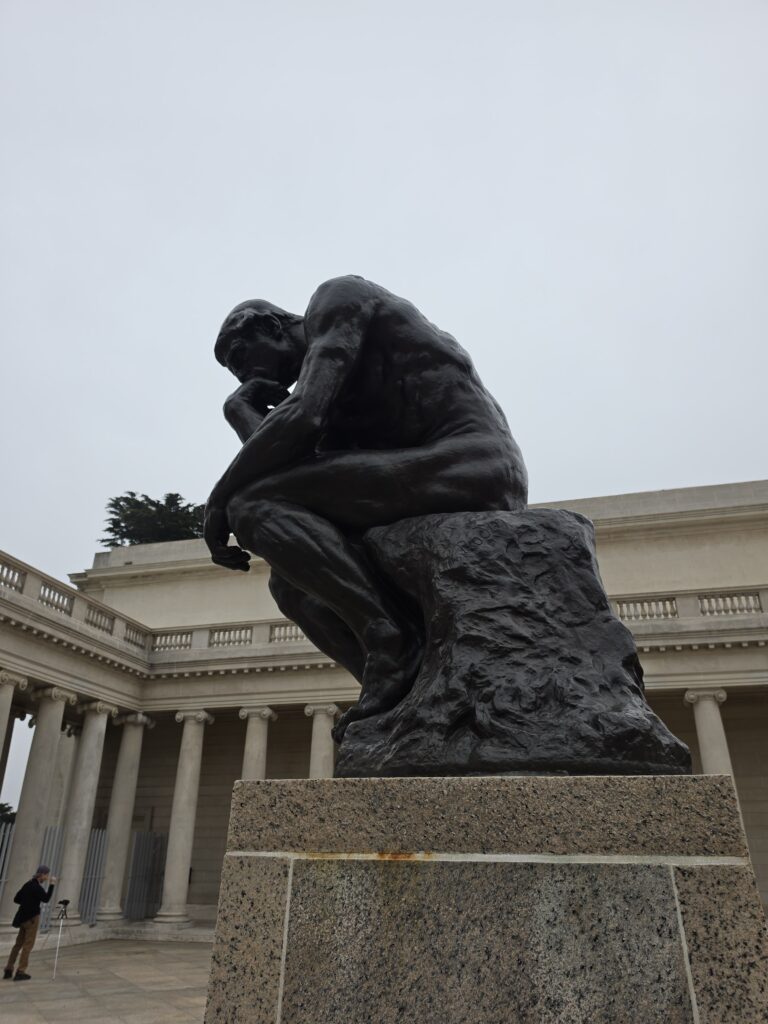
Technology is now another chapter in that remarkable history, but it should never be permitted to erase all the chapters that came before it. A billboard can command our attention for a moment, but it cannot compete with Rodin’s enduring humanity, the mysteries of an ancient Etruscan civilization, George Segal’s solemn warning against forgetting or the golden city lights seen from high above Union Square.
San Francisco’s true genius has never been artificial. It lives in the restless, complicated and endlessly creative people who built it, challenged it, loved it and refused to let it become ordinary. The city does not need an algorithm to give it an identity. It already possesses one—written in history, art, struggle, beauty and the stubbornly human desire to begin again.
Fortunately, the real San Francisco is still there—and when you find it, it can be extraordinary.
The Legion of Honor: San Francisco at Its Most Magnificent
My visit to the Legion of Honor was one of those moments.
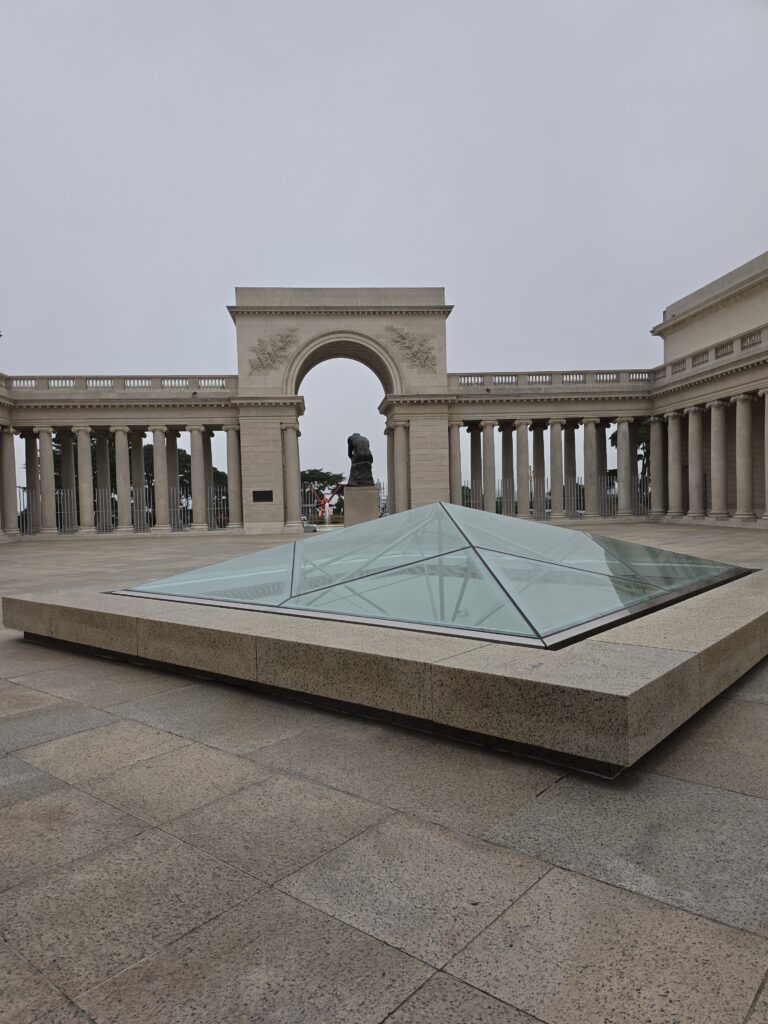
Perched above the Pacific in Lincoln Park, the museum offers the kind of grandeur and cultural depth I had hoped to encounter. Its neoclassical architecture, dramatic courtyard and magnificent setting immediately transport visitors away from the commercial noise of the city.
The museum’s celebrated collection of works by Auguste Rodin was unforgettable. There is something profoundly human about Rodin’s sculptures—the movement of the bodies, the emotional weight of the figures and the tension between strength and vulnerability. In a city currently surrounded by advertisements for artificial intelligence, experiencing art so intensely connected to the human hand and human condition felt particularly powerful.
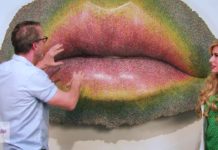
I was also fortunate to see The Etruscans: From the Heart of Ancient Italy, a rare exhibition exploring a civilization that flourished before the rise of the Roman Empire. Featuring more than 150 objects, the exhibition brings together sculpture, ceramics, jewelry and archaeological treasures that reveal a remarkably sophisticated ancient culture. It was a fascinating reminder that humanity has been creating, experimenting and searching for meaning for thousands of years—long before an algorithm attempted to define creativity for us. The exhibition runs through September 20, 2026.
Just outside the museum is another essential and deeply moving work: George Segal’s The Holocaust. The stark sculptural memorial depicts bodies lying behind barbed wire, with one solitary figure standing before them. It is intentionally uncomfortable and impossible to dismiss.
Seeing the memorial within such a beautiful natural setting makes it even more affecting. It interrupts the scenery and demands reflection—something meaningful art has always done. It does not try to sell, entertain or collect information. It asks us to remember.
A Glamorous Return to San Francisco
My stay at the Beacon Grand offered an entirely different but equally welcome glimpse of the city.
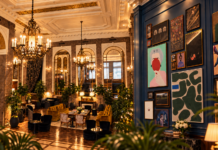
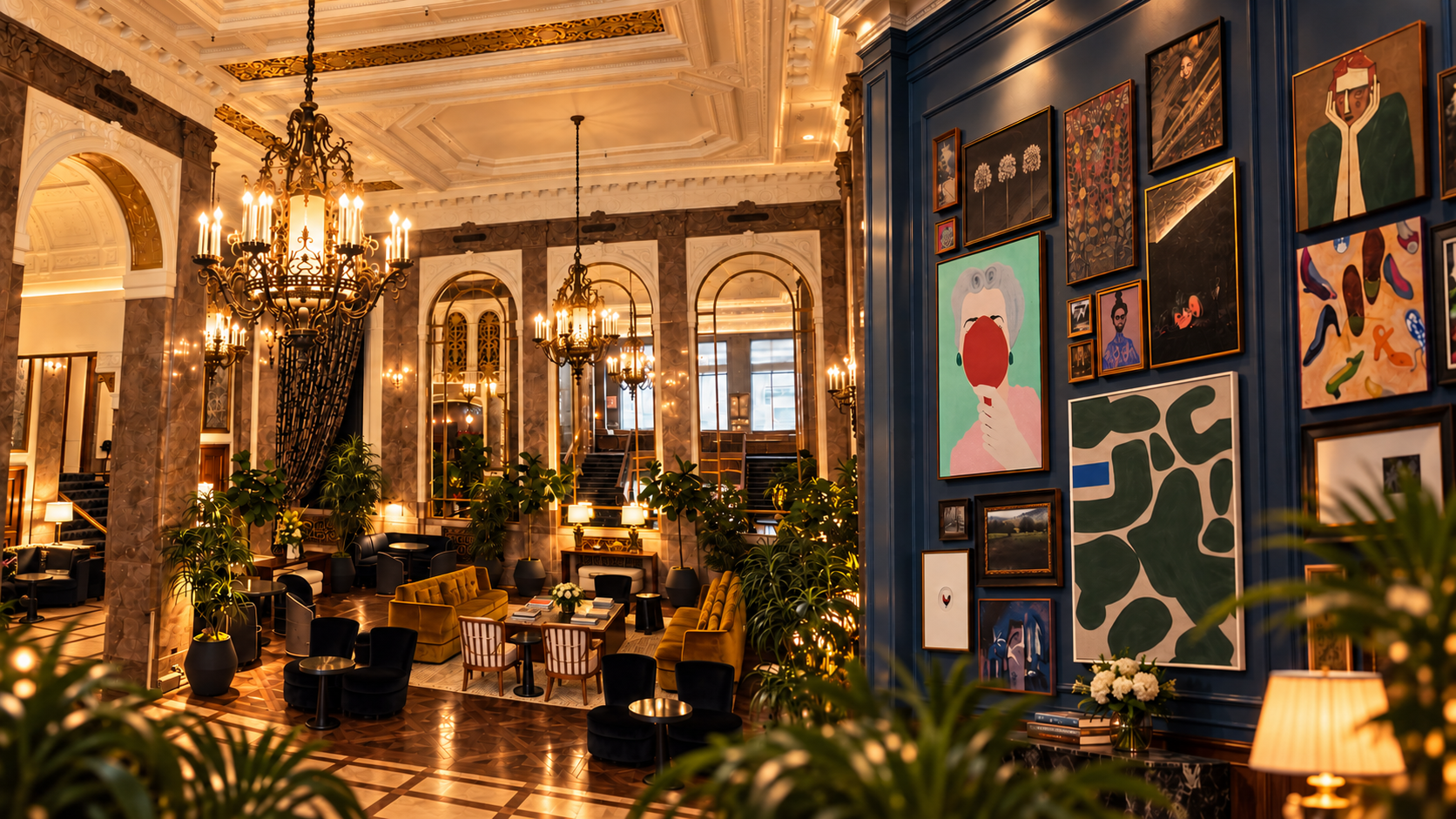
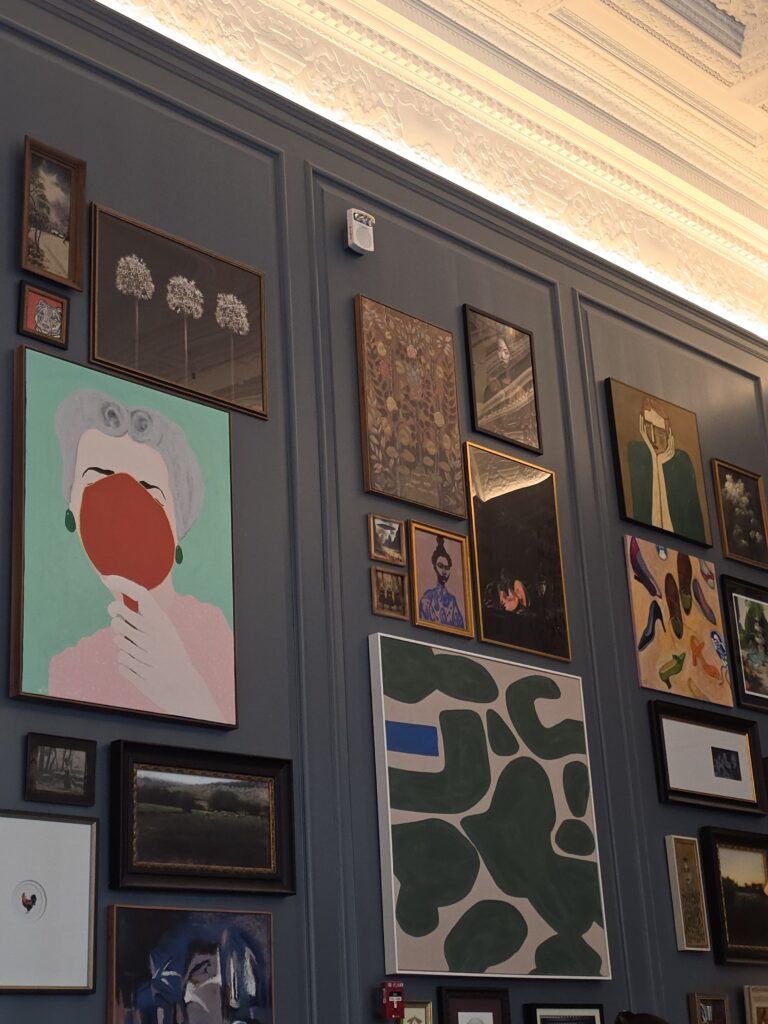
Located near Union Square, the hotel embraces the glamour of historic San Francisco while feeling polished, fashionable and very much alive. Its soaring interiors, elegant details and sense of occasion were exactly what I had been looking for. This was not the tired or neglected San Francisco that had initially concerned me. This was the sophisticated city of grand hotels, beautifully dressed rooms and evenings that still feel special.
At the top of the hotel, Starlite is an absolute must-see.
The glamorous 21st-floor lounge—formerly associated with the legendary Starlight Room—has been reimagined with jewel-toned interiors, velvet seating and sweeping views across the city. It feels theatrical without becoming tacky, contemporary without abandoning its history and fashionable without trying too hard. Even for someone who does not drink, the atmosphere alone makes it worth visiting.
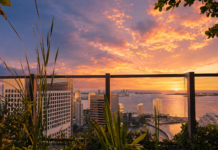
Looking out over San Francisco from Starlite, the city becomes cinematic again. The skyline glows, the streets recede into the distance and, for a little while, the billboards no longer dominate the view. Starlite’s revival celebrates the glamour of its storied predecessor while introducing a thoroughly modern design.

The City Behind the Advertising
My San Francisco visit became a study in contrasts.
There was the city presented by the AI billboards—a place seemingly determined to automate, accelerate and monetize everything. Then there was the city I discovered through Rodin, the mysterious Etruscans, George Segal’s haunting memorial, the elegance of the Beacon Grand and the sparkling views from Starlite.
One version of San Francisco shouted for my attention. The other earned it.
Artificial intelligence may be part of the city’s future, and it undoubtedly offers extraordinary possibilities. But innovation should enhance a city’s identity, not become its entire visual backdrop. When advertising is so pervasive that it competes with architecture, history and everyday human experience, it risks making a fascinating city feel like a product demonstration.
San Francisco does not need technology companies to manufacture an identity for it. Its true value already exists—in its museums, monuments, architecture, neighborhoods and enduring capacity to surprise.
The most memorable moments of my trip were not generated by artificial intelligence. They were created by artists, historians, architects and visionaries—and by the simple human experience of standing before something beautiful and allowing it to move me.
That is the San Francisco worth seeking out.
And when you find it, it is still magnificent.
What is a great Museum in San Francisco
Legion of Honor and De Young