












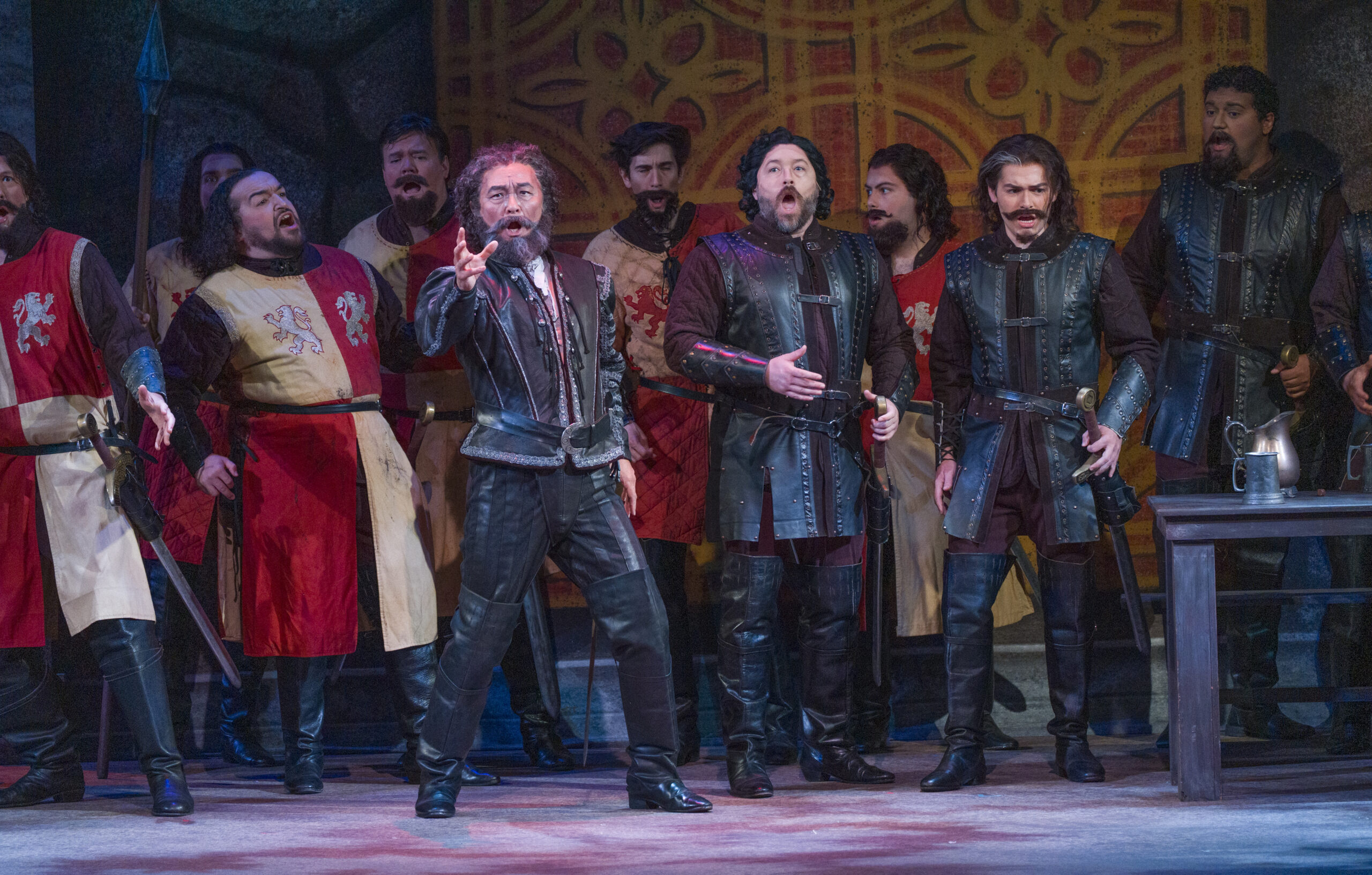

Opening Night Triumph: Il Trovatore Ignites the Stage
Reviewed by Dr. Jeffrey T. Marvin
Verdi’s Il Trovatore roared to life on opening night in a performance that proved both musically rich and dramatically compelling. It was another reminder of why Sarasota Opera stands at the pinnacle of the city’s vibrant arts scene. From the first ominous measures in the orchestra to the opera’s shattering final moments, the evening unfolded with a level of intensity and polish that demonstrates why Verdi’s masterpiece remains one of the enduring pillars of the operatic repertoire.
Central to the evening’s success was the extraordinary depth of sound produced by the orchestra under the baton of Maestro Victor DeRenzi. Few conductors have devoted so much of their artistic life to Verdi’s music, and this performance felt like the culmination of that long dedication. DeRenzi drew from the orchestra a sound that was both muscular and refined—darkly burnished in the lower strings, brilliantly alive in the brass, and consistently sensitive to the singers on stage. The familiar Verdian surges of drama arrived with thrilling precision while never sacrificing lyrical warmth. It was conducting that revealed a deep familiarity with the architecture of the score while allowing the music’s raw emotional force to emerge naturally. In many ways, the evening felt like a capstone moment in a distinguished career devoted to Verdi.
The orchestra responded magnificently. Verdi’s score requires both ferocity and finesse, and the players delivered both in abundance. The preludes and interludes shimmered with orchestral color, and the dramatic climaxes carried an electrifying power that filled the hall.
The evening began on a particularly strong note with the commanding presence of Young Bok Kim as Ferrando. His opening narration set the dramatic tone for the entire opera. Sung with resonant authority and clarity of line, Kim immediately drew the audience into the dark legend that propels the story. His bass voice conveyed both gravitas and narrative urgency, providing a thrilling and confident start to the evening.
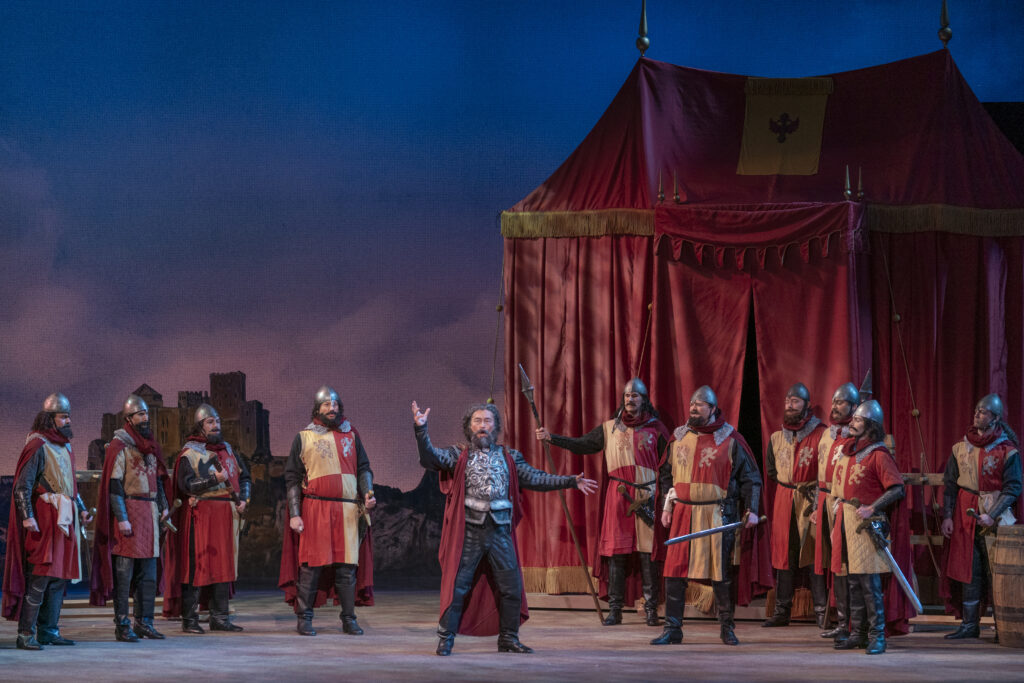
Stage director Marco Nisticò deserves special recognition for skillfully navigating the challenges posed by the theater’s restrictive stage and wings. His direction maintained dramatic focus while allowing the story to unfold clearly and with momentum. Scenes moved naturally from one to the next, and although brief pauses were necessary because of the physical constraints of the stage, the movement of principals and chorus across the playing space always felt purposeful and theatrically effective.
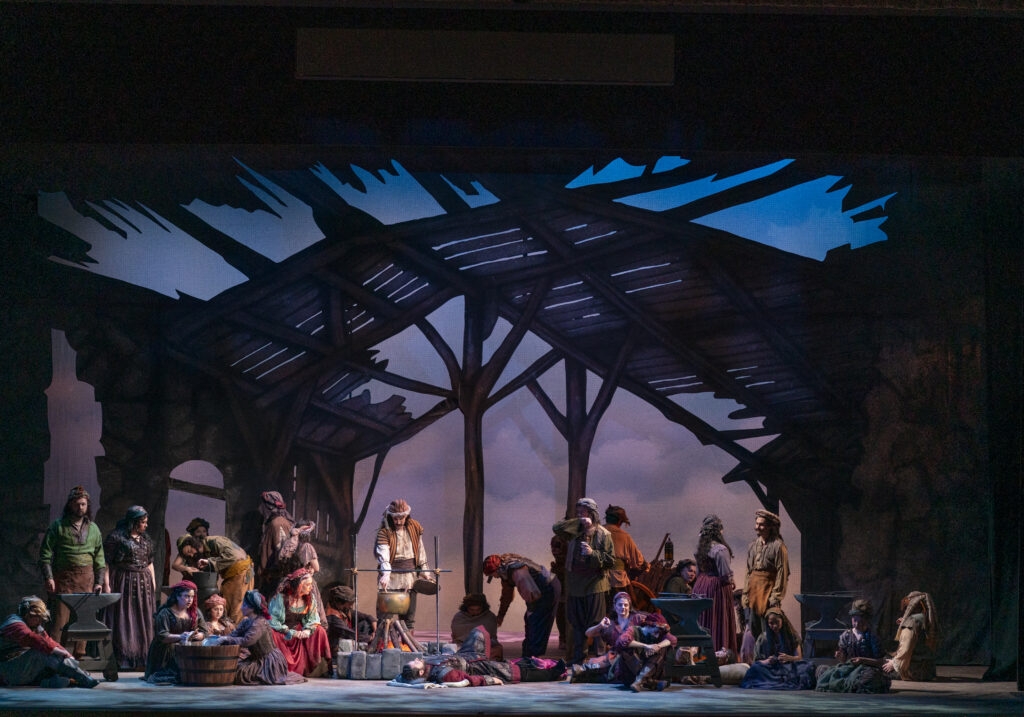
The scenic design by Michael Schweikardt demonstrated how logistical limitations can inspire theatrical creativity. In this production the stage accommodated eight different scene changes within only two acts, an impressive technical and artistic accomplishment. Each transformation was handled smoothly, and the resulting visual variety added depth and energy to the unfolding drama.
Costume designer Howard Tsvi Kaplan made splendid use of Sarasota Opera’s extensive wardrobe collection, creating a rich tapestry of period costume that enhanced both the historical setting and the individuality of the characters. The visual polish of the production was further supported by Sue Schaefer, whose hair and makeup design contributed significantly to the authenticity and refinement of the stage picture.
Chorus Master Artyom Pak also deserves special praise for shaping a relatively small ensemble into a chorus of remarkable presence and power. The singers performed with impressive precision and vitality, producing a sound that seemed far larger than their numbers. Their performance in the great ensemble scenes—particularly the celebrated “Anvil Chorus”—rang out with thrilling energy and focus.
The supporting artists also contributed meaningfully to the success of the evening. Gabrielle Barkidjija proved a sympathetic and effective companion to Aviva Fortunata’s Leonora, and their interactions brought warmth and credibility to the drama.
The principal cast rose impressively to the formidable vocal demands of Verdi’s score. Ricardo José Rivera brought commanding presence and vocal authority to the role of Count de Luna, creating a compelling portrait of aristocratic obsession. As Leonora, Aviva Fortunata sang with luminous tone and expressive sensitivity, fully embodying the character’s devotion and tragic resolve. In both of her memorable arias she floated beautifully controlled pianissimi, demonstrating remarkable technical control and musical refinement. The famed Miserere scene proved especially moving and became one of the emotional high points of the evening.
Victor Starsky’s Manrico was another highlight of the performance. His beautifully produced tenor filled the hall with a rich, vibrant sound that combined heroic brilliance with lyrical warmth. The voice carried effortlessly through Verdi’s demanding score, bringing both passion and vulnerability to the ill-fated troubadour.
Young Bok Kim’s powerful Ferrando anchored the drama from its opening moments, while Lisa Chavez’s Azucena grew steadily in dramatic intensity as the evening progressed. Her ringing mezzo-soprano gained strength and depth with each successive scene, culminating in a portrayal of gripping emotional power.
By the final curtain the audience responded with prolonged and enthusiastic applause, recognizing not only a superb opening night but also a company performing at an exceptionally high level. Above all, the evening stood as a tribute to Maestro DeRenzi, whose masterful command of Verdi’s score crowned the performance with authority, passion, and deep musical understanding.
A most satisfying evening of opera and a proud achievement as Sarasota Opera presents the third production of its Winter Festival Season. This is truly a production not to be missed.
https://www.sarasotaopera.org/verdi-cycle
Jeffrey T. Marvin, DDS, MAGD, MICOI