








There are productions that honor legacy, and then there are productions that ignite it—lifting a beloved classic into something at once reverential and utterly exhilarating. Asolo Repertory Theatre’s Fiddler on the Roof achieves precisely that rare alchemy: a sweeping, visually sumptuous, emotionally resonant triumph that doesn’t simply revisit Broadway tradition—it electrifies it.
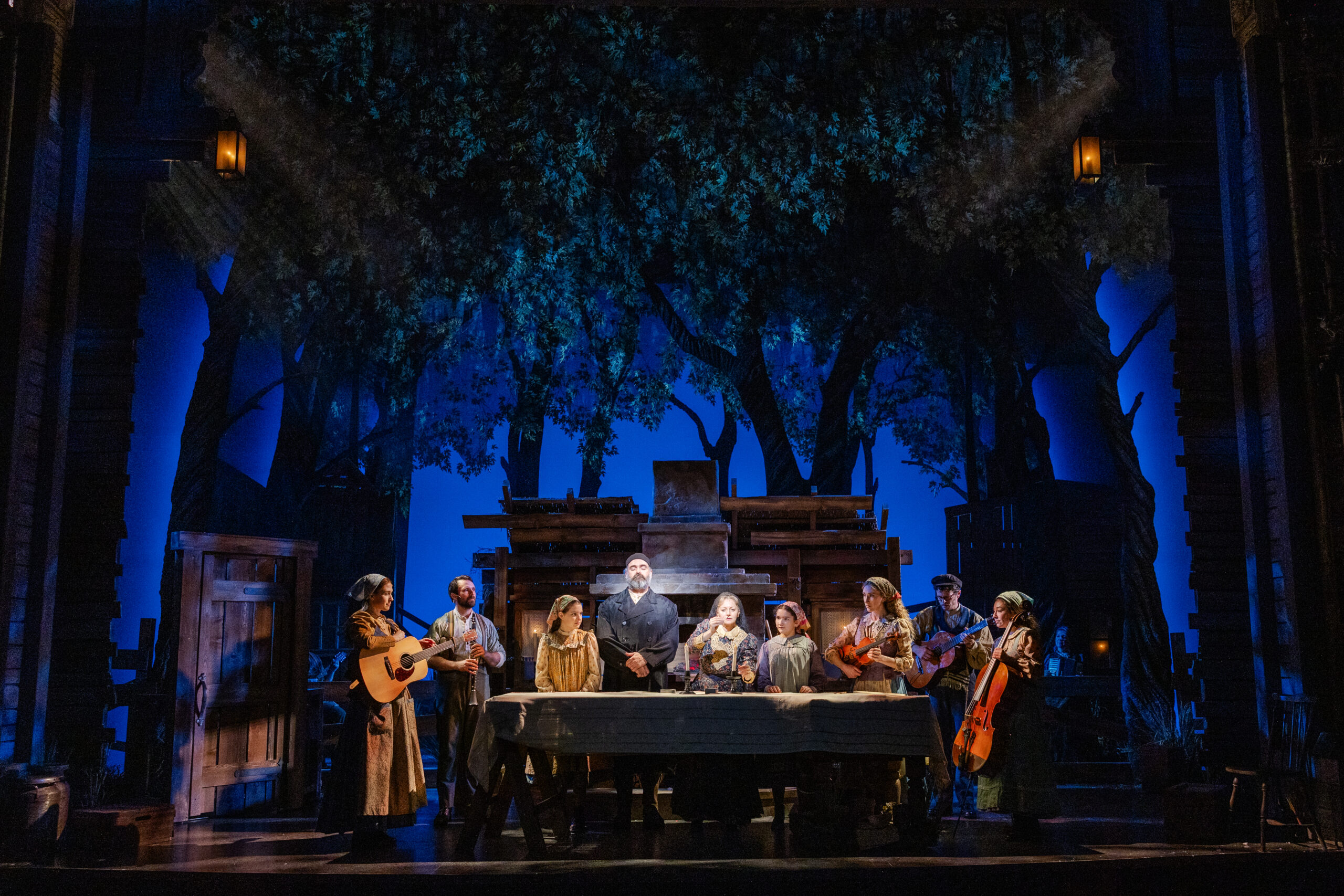
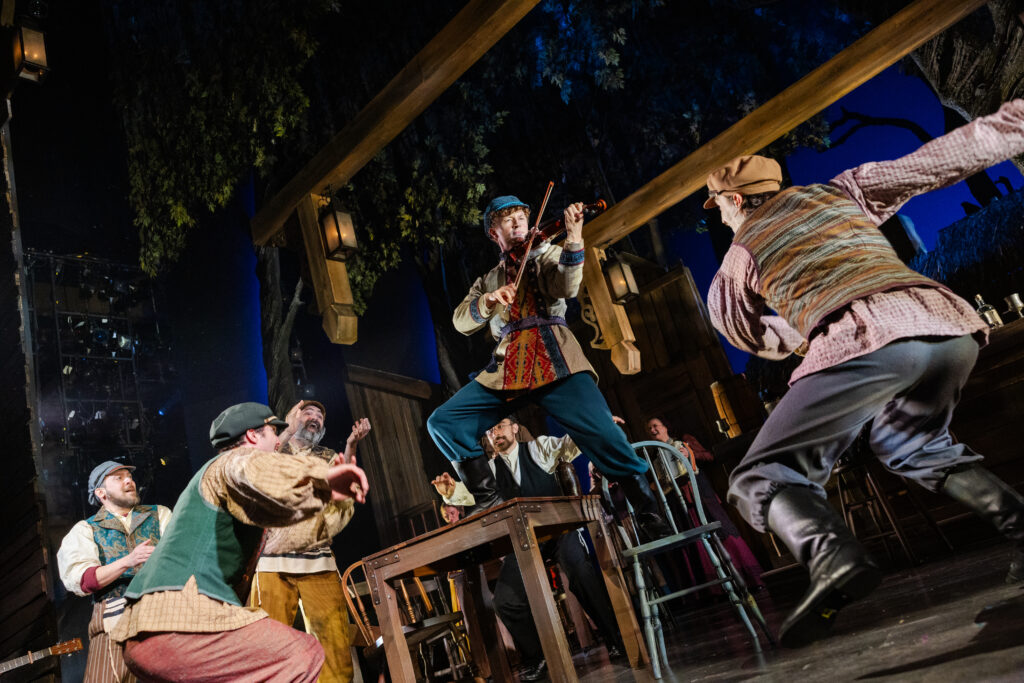
From its first evocative notes, the production commands attention with a cinematic sense of scale and an almost painterly eye for detail. Anatevka emerges not as a distant, romanticized village, but as a richly textured world—alive with history, humanity, and quiet resilience. The scenic design is nothing short of masterful. Each element feels meticulously curated: weathered structures, layered horizons, and atmospheric lighting that shifts like a living canvas, moving effortlessly from golden warmth to somber dusk. The result is immersive, transporting, and undeniably grand.
But this grandeur never overwhelms—it frames the story with exquisite intention. The staging possesses a fluid elegance, allowing scenes to unfold with a natural, almost musical rhythm. Transitions glide rather than interrupt, reinforcing the production’s central themes of continuity and change. There is poetry in the movement of this show—in the way space is shaped, in the way light breathes across the stage, in the way stillness is given as much weight as spectacle.
And what a spectacle it is.
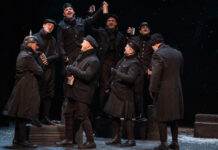
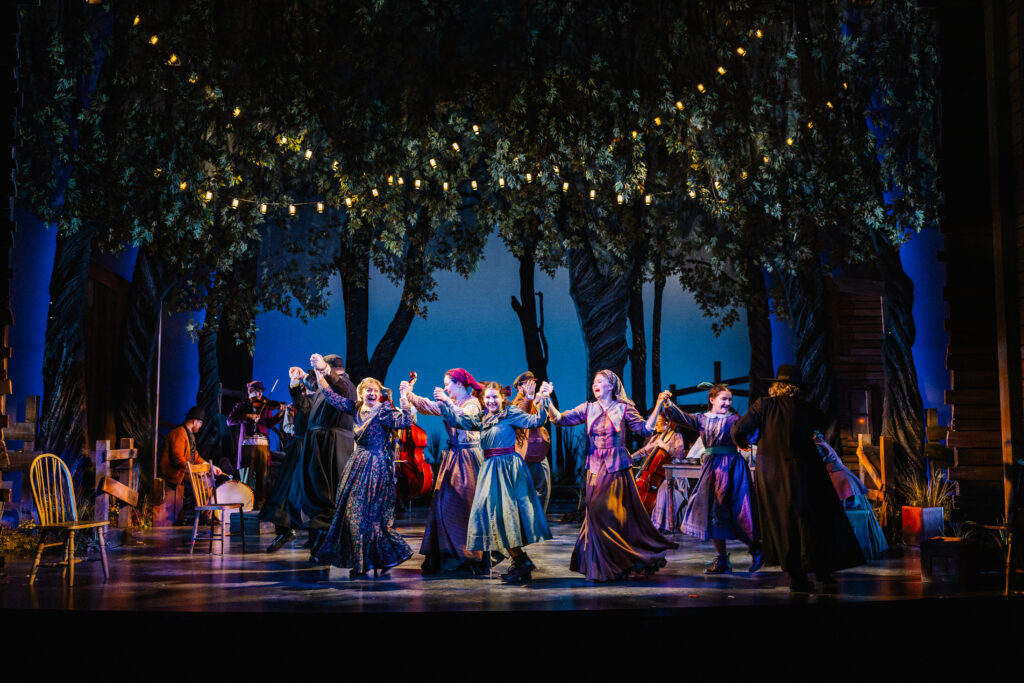
The ensemble sequences pulse with vitality, their choreography both rooted in tradition and elevated with a thrilling sense of precision and dynamism. There is a muscularity to the movement—grounded, deliberate, and deeply expressive—that honors the cultural origins of the piece while infusing it with a renewed urgency. Every step feels intentional. Every formation tells a story. The stage becomes not just a setting, but a living organism, vibrating with collective energy.
At the heart of it all lies a cast of extraordinary depth and cohesion. This is ensemble work at its most refined—where each performer contributes not only individual excellence but a palpable sense of shared purpose. The result is electric: a company that moves, breathes, and feels as one, yet never sacrifices the individuality of its characters.
The portrayal of Tevye is a masterclass in layered performance—rich with humor, humanity, and a deeply felt vulnerability. His internal dialogues resonate with striking immediacy, drawing the audience into his moral and emotional reckoning. There is a warmth here that invites laughter, but also a quiet gravity that lingers long after the moment has passed.
The daughters, each navigating their own path between tradition and autonomy, are rendered with remarkable nuance. Their journeys unfold with an authenticity that feels both intimate and expansive—deeply personal, yet universally understood. The emotional architecture of these relationships is handled with such care that even the smallest exchanges carry profound weight.
Vocally, the production soars.
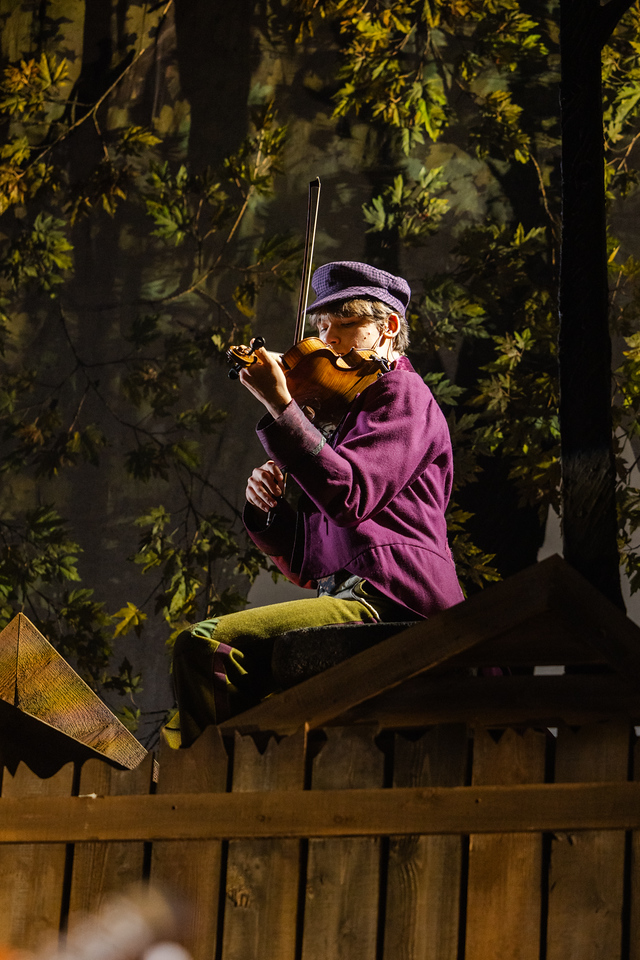
The score—one of the most iconic in the canon of musical theater—is delivered with a richness and clarity that feels both timeless and immediate. The orchestra provides a lush, resonant foundation, while the voices on stage rise with breathtaking assurance. These are not merely performances of familiar songs; they are re-interpretations infused with fresh emotional intelligence. Each number lands with renewed impact, revealing layers that feel newly discovered.
What distinguishes this Fiddler on the Roof most profoundly, however, is its unwavering emotional intelligence. It understands that spectacle alone is not enough—that true theatrical power lies in the delicate balance between scale and sincerity. And here, that balance is executed with remarkable finesse.
Moments of grandeur give way to moments of stillness. Laughter softens into reflection. Joy is shadowed by the quiet ache of change. The production trusts its audience—allowing space for emotion to unfold naturally, without excess or manipulation. The result is deeply affecting, and, at times, quietly devastating.
There is also an unmistakable awareness of the musical’s historical and cultural resonance. Themes of displacement, identity, and resilience are not merely acknowledged—they are felt. The production carries a sense of reverence for its roots, yet it never feels museum-like. Instead, it pulses with relevance, reminding us that the tensions between tradition and progress remain as urgent today as ever.
Under the assured direction of Peter Rothstein, this production finds its striking equilibrium between reverence and reinvention. Rothstein approaches Fiddler on the Roof with a deeply considered hand, shaping each moment with clarity, emotional intelligence, and a keen sense of theatrical rhythm. His vision allows the story to breathe—never rushed, never indulgent—guiding the audience through its shifting emotional landscape with quiet authority. That vision is elevated further by the inspired choreography of Daniel Pelzig, whose work pulses with grounded strength and cultural authenticity while maintaining a refined, contemporary dynamism. Every movement feels purposeful, rooted in tradition yet alive with fresh energy. Complementing this is the richly textured musical direction of Matthew R. Meckes, whose orchestral leadership brings both warmth and precision to the iconic score. Together, this creative trio forms the architectural backbone of the production—crafting a seamless fusion of movement, music, and narrative that elevates the entire experience into something truly transcendent.
In the hands of Asolo Repertory Theatre, Fiddler on the Roof becomes something more than a revival—it becomes a reawakening. A celebration of heritage. A meditation on change. A testament to the enduring power of storytelling.
This is theater at its most elevated: visually arresting, musically sublime, and emotionally transcendent.
A production of rare beauty and breathtaking scope, it does not simply ask to be seen—it demands to be experienced.