












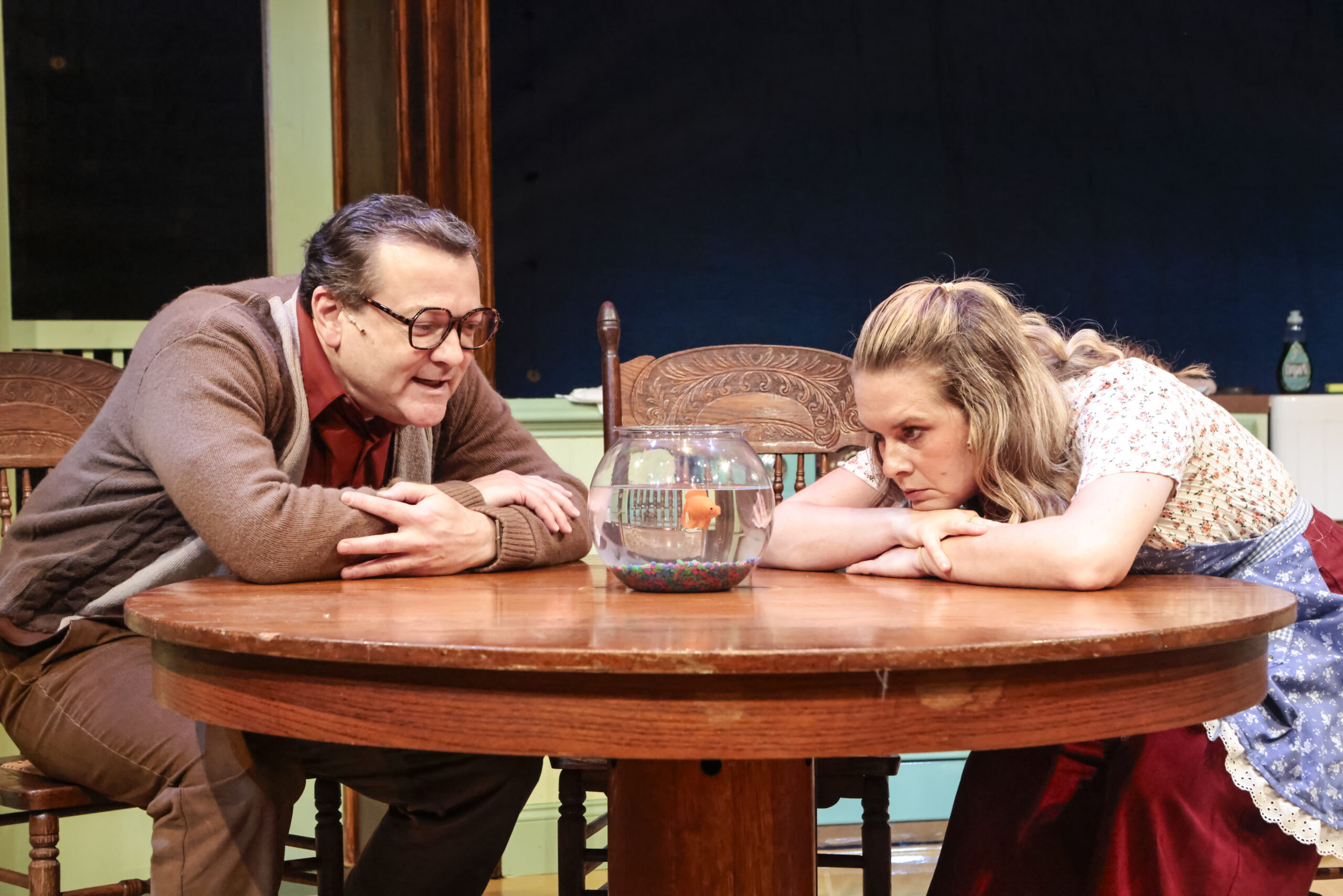

There’s something quietly miraculous about a play that manages to hold a century of life in its hands without letting it feel heavy. That’s exactly what Birthday Candles does in its beautifully realized production at Florida Studio Theatre—a production that is as warm, witty, and elegantly staged as anything you’ll see this season.
Directed with a sure and graceful touch by Kate Alexander, the play takes on a deceptively simple premise: we revisit one woman’s life, year after year, birthday after birthday, as time quietly marches forward. Ninety minutes later, we’ve experienced 107 years—not in a rushed blur, but in a series of intimate, carefully observed moments that feel both specific and universal.
And yes—there’s cake. Real cake.
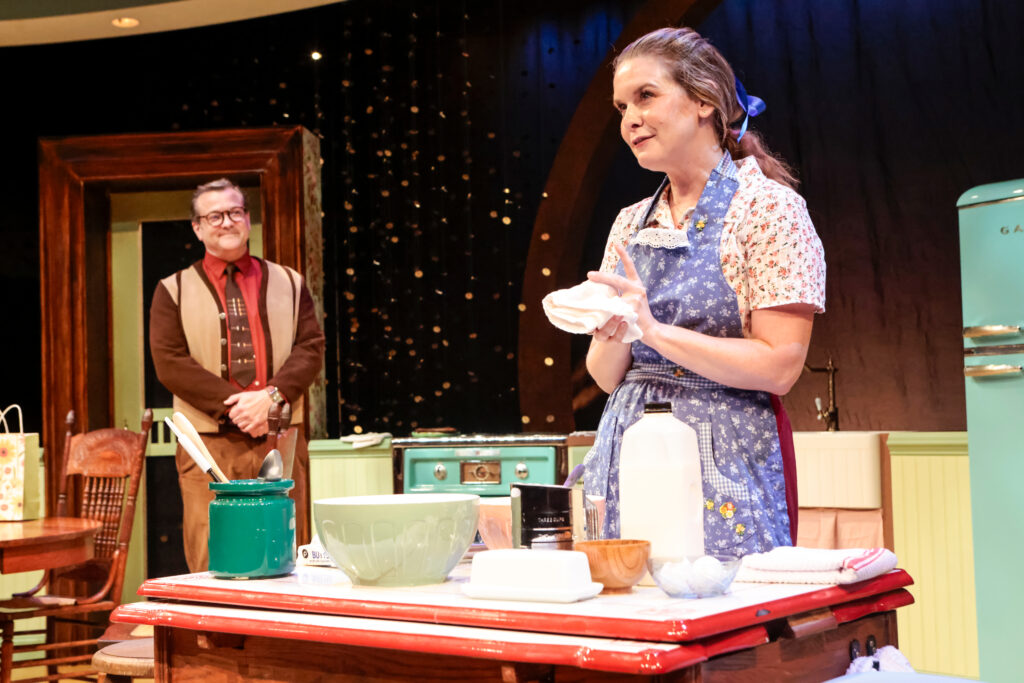
Not a prop, not mimed, not suggested. They actually bake a cake onstage. The scent drifts into the audience, becoming part of the storytelling in a way that’s unexpectedly powerful. It’s such a small detail, but it grounds the play in something tactile and immediate. You don’t just watch time pass—you smell it, feel it, almost taste it. It’s one of those theatrical choices that could feel gimmicky elsewhere, but here it’s seamlessly woven into the fabric of the production.
Originally arriving from Broadway, the script carries that polished, sharp-edged intelligence you’d expect, but this production leans into something even more meaningful: connection. The staging is clean and purposeful, allowing the audience to focus on what matters—the passage of time, the quiet humor in routine, and the surprising poignancy of the everyday.
And it is funny. Genuinely funny.
There’s a delicate balance at play here, and it’s handled with remarkable finesse. One moment, you’re laughing at the familiar absurdities of family life—the repeated conversations, the quirks that never change—and the next, you’re caught off guard by a line that lands with surprising emotional weight. Not heavy-handed. Not overly sentimental. Just honest.
The narrative does lean into a familiar trope: a life where dreams are deferred, particularly within the context of marriage and family. The central character doesn’t fully realize her ambitions until later in life, after navigating disappointments with her husband and the slow accumulation of everyday compromises. It’s territory we’ve seen before, and at times it edges toward being a bit overused.
But here’s the thing—it still works.
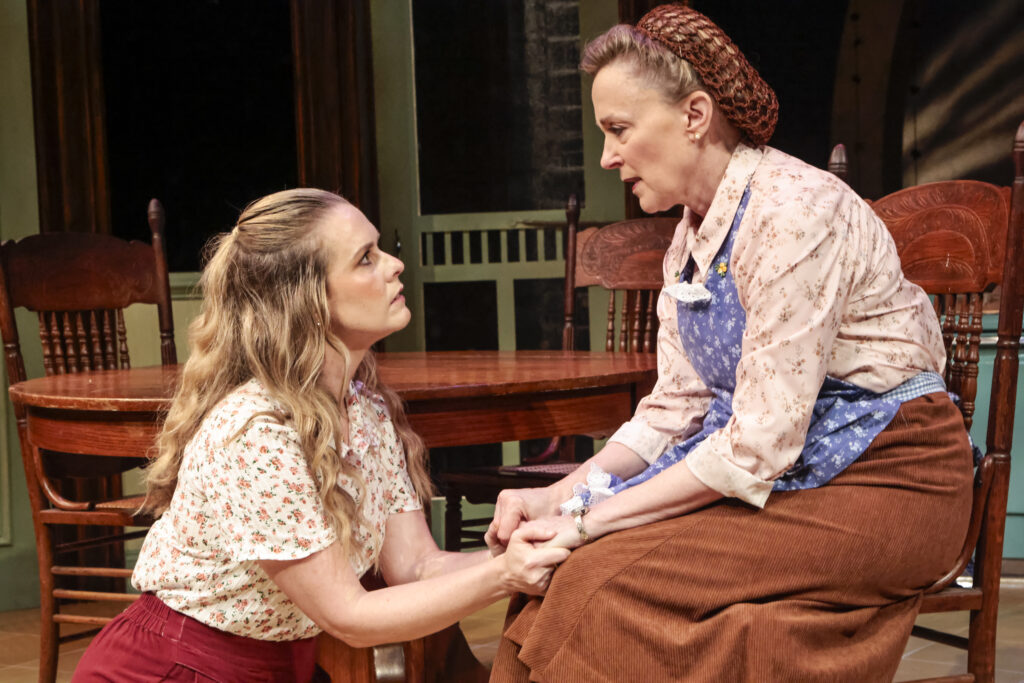
Because the play doesn’t present this arc as a grand, sweeping revelation. There’s no dramatic “finally, everything changes” moment. Instead, it unfolds quietly, almost imperceptibly, much like real life. Success, fulfillment, identity—they don’t arrive all at once. They creep in, piece by piece, often after you’ve stopped expecting them.
That subtlety keeps the story from feeling predictable. Even when you recognize the structure, the emotional beats feel earned rather than manufactured.
The pacing is particularly impressive. Covering over a century in 90 minutes could easily feel rushed or disjointed, but here it flows with a natural rhythm. Years pass in the blink of an eye, yet each return to the kitchen feels grounded and familiar. It’s like flipping through a photo album where every image holds a memory you didn’t realize you still had.
Visually, the production is understated but effective. The set evolves just enough to suggest the passage of time without drawing attention away from the performances. It’s not about spectacle—it’s about suggestion. And that restraint works beautifully.
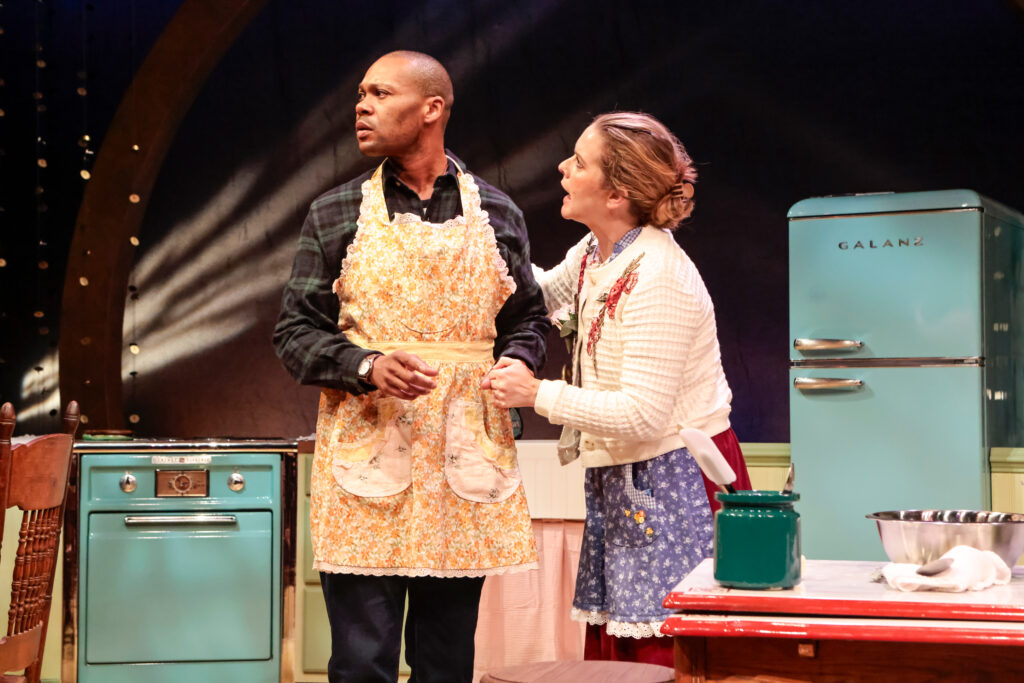
What really lingers is the play’s perspective on time itself. It doesn’t treat aging as something tragic or something to fear. Instead, it presents it as a series of lived moments—some joyful, some frustrating, some quietly profound. There’s an honesty to it that feels refreshing, especially in a world that often rushes past these reflections.
And then there’s the humor—the kind that sneaks up on you. It’s rooted in recognition. You laugh because you’ve lived something like it, or you know someone who has. It’s the humor of real life, sharpened just enough to sparkle.
By the time the final moments arrive, there’s a quiet sense of completion. Not sadness, exactly. More like a gentle acknowledgment of a life fully lived. The play doesn’t demand tears—it earns reflection. And in doing so, it becomes all the more powerful.
Florida Studio Theatre has a reputation for delivering smart, engaging productions, and this one fits beautifully within that tradition. It’s polished without being distant, meaningful without being heavy, and consistently engaging from start to finish.
If you’re looking for a night at the theater that will make you laugh, think, and maybe leave you craving a slice of cake—and a moment to appreciate the passage of your own time—this is it.
Because Birthday Candles isn’t really about birthdays.
It’s about what rises, slowly and imperfectly, in between.
https://www.floridastudiotheatre.org