









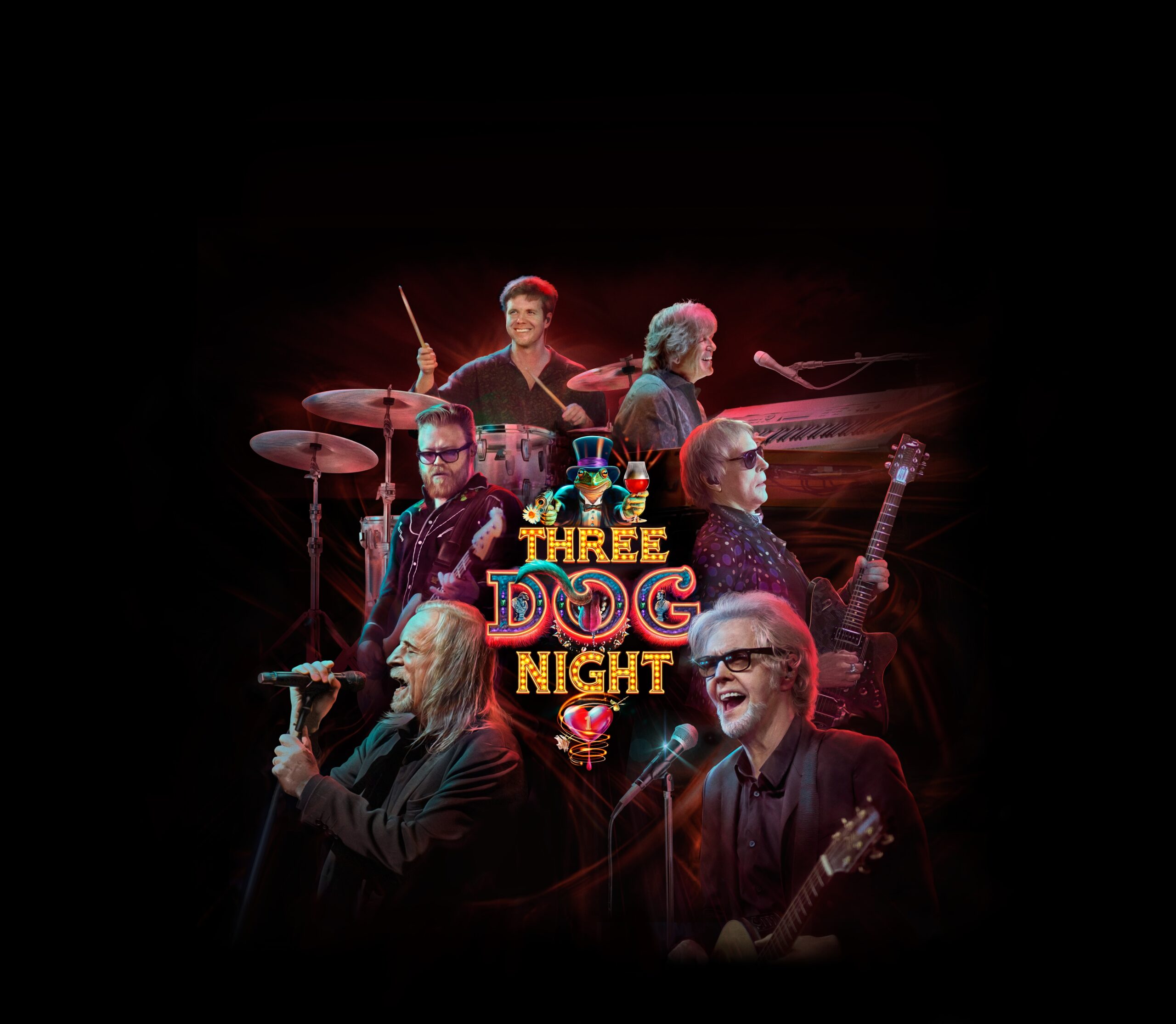

From Laurel Canyon to Three Dog Night’s Six-Decade Run, Danny Hutton Is Still Singing the Songs That Defined an Era
Interview by Susan Short
Rock history has its sacred addresses.
Abbey Road. The Sunset Strip. Woodstock.
But few places carry the mystique of Laurel Canyon, the winding hillside neighborhood above Hollywood where, in the late 1960s and early ’70s, the sound of a generation seemed to echo from every house. Songs were written in living rooms. Harmonies drifted through open windows. Guitars passed from hand to hand as musicians wandered between homes like members of a creative tribe.
Danny Hutton didn’t just pass through that world.
He lived it.
For nearly fifty years Hutton has called Laurel Canyon home, residing in a house he purchased from shock-rock pioneer Alice Cooper more than four decades ago. Despite being one of the canyon’s longest-tenured residents, he laughs that his story somehow never made it into the documentaries about the neighborhood.
“I’ve been up there almost half a century,” Hutton says with a grin. “But somehow I never got invited into the Laurel Canyon films.”
It’s an ironic omission considering Hutton helped create one of the most successful bands in American pop history. As founder of Three Dog Night, the iconic group he conceived in 1968, Hutton helped lead a band that produced 21 consecutive Billboard Top 40 hits, including three No. 1 singles, while releasing 12 straight RIAA-certified Gold albums and selling more than 50 million records worldwide.
Now celebrating its sixth decade, Three Dog Night’s music remains deeply embedded in American culture.
But Hutton’s path to the center of rock history began far from California.
An Irish Beginning
Danny Hutton was born in Buncrana, County Donegal, Ireland, before his family emigrated to the United States when he was four and a half years old. They settled in Boston, where music and entertainment were part of everyday life.
“My whole extended family performed,” Hutton recalls. “Every month we’d have these little shows. Someone would sing, someone would tell stories, someone would juggle, dance, or recite poetry.”
It was less like a family gathering and more like a living-room variety show.
But their Boston years took an unexpected turn when Hutton’s mother, who managed a boarding house, rented a room to a man later connected to the infamous Brink’s robbery.
“The police ended up protecting the house for months,” Hutton says. “It got pretty intense.”
Eventually the family decided to head west.
Their destination would change Hutton’s life.
Hollywood.
Growing Up in Hollywood’s Golden Shadow
When Hutton arrived in California as a teenager, Hollywood still carried the glow of its golden age.
“You could walk down the street and see people like Fred Astaire or Dean Martin,” he remembers. “It felt like you were right in the middle of the entertainment world.”
Like many young dreamers in Los Angeles, Hutton took whatever jobs he could find. One of his earliest gigs was washing dishes in a well-known café.
It was there that a teen magazine photographer noticed him and struck up a conversation—one of those small moments that quietly change a life.
Soon afterward Hutton landed a job at Disney.
“I was loading and unloading records,” he says. “It wasn’t glamorous, but I was inside the music business.”
And once he was inside, he wasn’t leaving.
Hanna-Barbera and the First Break
The next chapter began with Hanna-Barbera, the animation studio behind The Flintstones and The Jetsons. Hutton joined the company’s record division as a songwriter, producer, and recording artist.
During that period he recorded “Roses and Rainbows,” a sunshine-pop single that became his first regional hit.
“It all started moving pretty quickly after that,” he says.
The Hanna-Barbera connection also placed him inside pop-culture history. When The Flintstones introduced the characters Pebbles and Bamm-Bamm, Hutton appeared in the storyline as a rock-star character.
“It was the ’60s,” he laughs. “Rock and cartoons were mixing together.”
The Idea That Changed Everything
By the late 1960s Hutton had become part of the Laurel Canyon and Sunset Boulevard music scene, working as a songwriter and producer.
It was there that he envisioned a new kind of band—one built around three lead vocalists sharing the spotlight.
Hutton teamed with Cory Wells and Chuck Negron, and the trio began performing together.
Originally they planned to record with Hutton’s friend and mentor Brian Wilson of the Beach Boys. Wilson even gave the group an early name—Redwood—and began recording songs with them.
But when the Beach Boys objected to Wilson giving songs to another band, the project was abandoned.
After a showcase performance at the legendary Troubadour nightclub in Hollywood, the trio attracted label attention and eventually signed with ABC-Dunhill Records.
Three Dog Night was born.
A Signature Sound
The band assembled a powerful lineup of musicians and began recording with producer Richie Podolor and engineer Bill Cooper at American Recording Company.
Their formula was distinctive: three strong voices sharing lead vocals, blending into rich harmonies over a driving rock-and-roll foundation.
The results were immediate.
Between 1969 and 1975 Three Dog Night dominated the charts with 21 consecutive Top 40 hits, including songs like:
Joy to the World
Mama Told Me (Not to Come)
Black and White
One
Shambala
Never Been to Spain
The band also became known for recognizing great songs before the rest of the industry.
They recorded early material by rising songwriters including Harry Nilsson, Randy Newman, Elton John, Laura Nyro, Paul Williams, and Hoyt Axton.
“We were always looking for great songs,” Hutton says. “If something moved us, we recorded it.”
By 1975 the band had sold more than 50 million records worldwide and helped pioneer the concept of the large-scale stadium rock tour.
They even performed at two Super Bowls.
Elton John and the London Connection
During a trip to London, Hutton was introduced to a young songwriter named Reginald Dwight.
“He wasn’t famous yet,” Hutton says.
The young musician would soon become known as Elton John.
“We became friends back then,” Hutton says. “And we’ve stayed friends ever since.”
https://www.facebook.com/reel/818802137683214
Music, Friendship, and the Long View
Over the decades Hutton formed friendships with many of the artists who shaped rock history.
One of the closest was Brian Wilson.
“I attended his weddings,” Hutton says quietly. “And recently his funeral.”
Rock history, Hutton reminds us, isn’t just about records and charts.
It’s about relationships.
“These weren’t just colleagues,” he says. “They were friends.”
Still On Stage
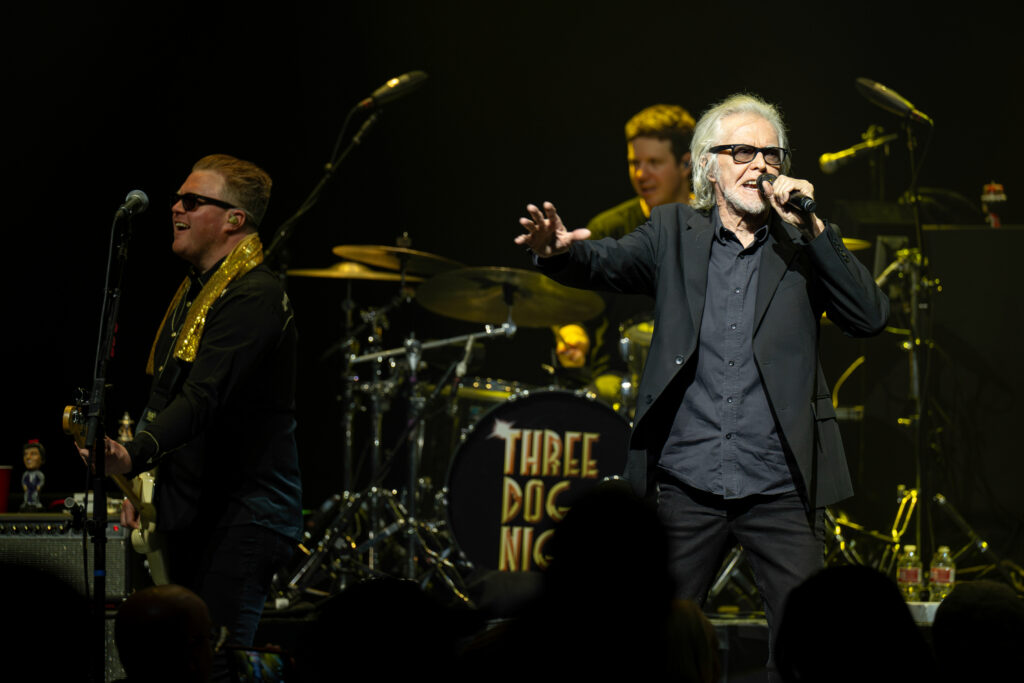
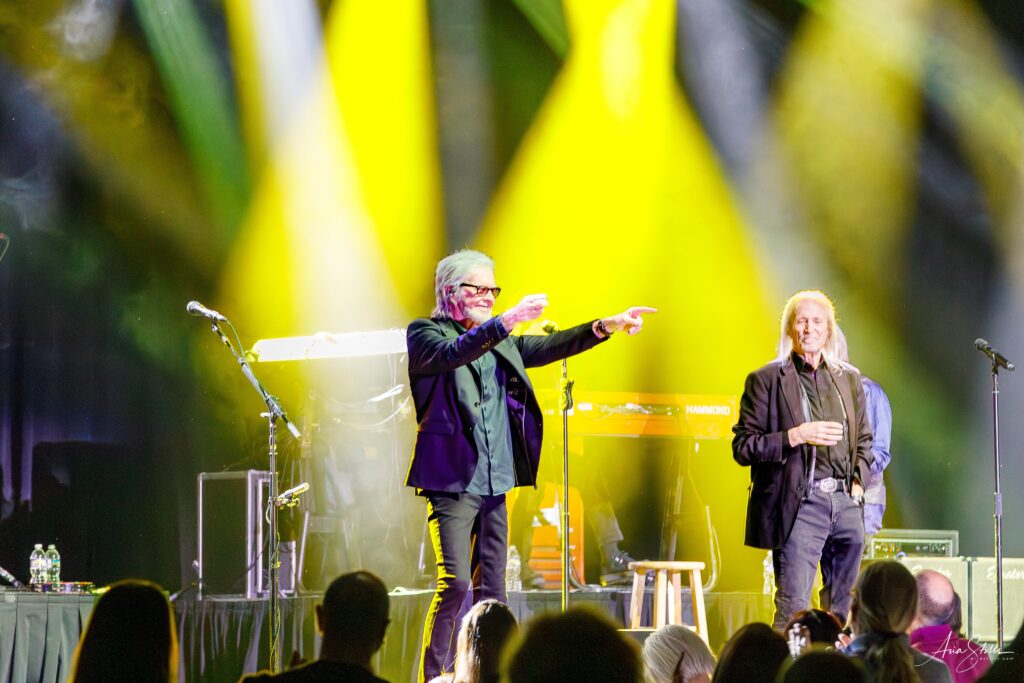
More than fifty years after their first hit records, Three Dog Night continues to tour extensively, performing more than 80 shows a year.
The crowds now include multiple generations.
“We see people who came to our shows in the ’70s,” Hutton says. “Now they bring their kids—and sometimes their grandkids.”
Sarasota: The Music Continues
Fans will have the chance to see Danny Hutton and Three Dog Night live at the Van Wezel Performing Arts Hall in Sarasota on Thursday, March 19.
For Hutton, the thrill of performing hasn’t faded.
“The songs still connect,” he says. “That’s the best feeling in the world.”
More than half a century after the music of Laurel Canyon first echoed through the hills above Los Angeles, Danny Hutton remains part of the living soundtrack of American rock and roll.
And night after night, the songs keep playing.
For all the accolades, chart records, and decades of music history, Danny Hutton remains remarkably genuine. Warm, thoughtful, and generous with his stories, he was a true pleasure to interview — the kind of artist who reminds you that behind every great song is an even better human being.
Sidebar: Essential Three Dog Night
Ten Songs That Defined the Band
• Joy to the World
• Mama Told Me (Not to Come)
• One
• Black and White
• Easy to Be Hard
• Shambala
• Never Been to Spain
• Eli’s Coming
• Celebrate
• Pieces of April
Timeline: Danny Hutton & Three Dog Night
1950s – Moves to Boston, later relocates to California
Mid-1960s – Works with Hanna-Barbera Records, releases “Roses and Rainbows”
1968 – Forms Three Dog Night
1969–1975 – Band scores 21 consecutive Top 40 hits
1970s – 12 straight Gold albums, 50+ million records sold
1970s–present – Tours internationally for decades
2020s – Band celebrates its sixth decade
2026 – Release of new studio album Enter