










“Come From Away” at Asolo Repertory Theatre: A Triumph of Heart, Humanity, and Theatrical Brilliance
There are nights in the theatre that feel less like a performance and more like a collective experience—something shared, absorbed, and carried out of the building long after the curtain falls. Come From Away at the Asolo Repertory Theatre is one of those rare productions. It is extraordinary in every conceivable way: extraordinary in its heart, extraordinary in its storytelling, and extraordinary in its ability to transform a moment of profound darkness into a radiant celebration of humanity.
When I first heard about a musical based on 9/11, I’ll admit I hesitated. The idea seemed heavy, somber, even odd. How could a Broadway-style show possibly approach one of the most painful days in American history without feeling exploitative or unbearably grim? But Come From Away has a secret ingredient—a big, generous, overflowing heart. And in the hands of the Asolo Rep’s talented creative team and cast, that heart beats even louder.

A Small Town Thrust Into History
At its core, Come From Away is not about the attacks themselves. Instead, it spotlights a lesser-known slice of global history that unfolded far from New York, Washington, or Pennsylvania. On September 11, 2001, when American airspace abruptly closed, thirty-eight planes carrying nearly 7,500 passengers were diverted to Gander, Newfoundland—a remote community barely large enough to support a single supermarket, let alone thousands of stranded strangers.
What happened next is the reason this story deserved a musical.
The people of Newfoundland, known affectionately as “Newfies,” didn’t just open their airport. They opened their homes, schools, gymnasiums, stores, kitchens, churches, and hearts. They provided meals, clothing, comfort, and endless doses of humor and kindness. They didn’t hesitate; they simply acted. For five days, the town became a global crossroads of fear, hope, bewilderment, and connection.
Come From Away takes those real testimonies—collected from residents and passengers alike—and weaves them into an interlocking tapestry of moments that feel authentic because they are authentic. The result is a show that never wallows in tragedy but instead elevates the resilience and goodness that can emerge when the world stands still.

Actors Who Shape-Shift With Purpose
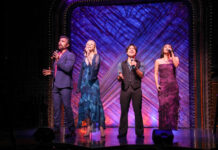
One of the most striking artistic feats of this production is the cast. Each performer plays multiple roles—switching effortlessly between a local resident (a Newfie) and a passenger (a “come-from-away,” the Newfoundland term for anyone not from there). With a tilt of the head, a shift in accent, or the turning of a jacket, the actors transform completely, moving between perspectives, cultures, and emotional landscapes.
It’s a reminder of how small the world becomes in a crisis. The same actor who welcomes passengers with a pot of coffee may later slip into the role of a terrified traveler desperately trying to call loved ones back home.
This constant fluidity not only highlights the versatility of the ensemble but underscores the interconnectedness of the story. No one remains a bystander; everyone becomes part of one shared narrative.

Direction That Moves Like the Stories Themselves
The Asolo Rep production moves with precision and momentum. Scenes transition in a heartbeat—much like the spontaneous, reactive nature of the real events. Chairs become airplanes. A simple table becomes a community center. The stage transforms from a cockpit to a bar to a shelter with theatrical sleight-of-hand and impeccable timing.
Yet despite this brisk pacing, the show never feels rushed. Instead, it breathes exactly where it needs to breathe, giving weight to personal revelations, quiet confessions, unlikely friendships, and moments of levity that feel astonishingly natural. Humor becomes a lifeline in this production—something that mirrors the real Newfoundland character. The jokes are quick, sharp, and often refreshingly unpolished, in the best possible way.
A Scenic Design That Does More With Less
The scenic design by Adam Koch deserves its own applause. Instead of overwhelming the stage with elaborate sets, Koch embraces the beauty of minimalism. Wood textures, versatile furniture, and strategic levels create Gander’s rugged charm without ever distracting from the performers. It’s a landscape that feels grounded, earthy, and distinctly maritime—almost smelling of salt air and community kitchens.

This simplicity allows the story to shine. It also reinforces a central theme: extraordinary kindness often comes from the simplest gestures.
Lighting That Paints Emotion
Lighting designer Paul Whitaker elevates every scene with quiet brilliance. His palette moves from icy blues to warm ambers, guiding the audience through shifts in tone with cinematic subtlety. Onstage, light becomes a storyteller—softening during moments of vulnerability, sharpening during scenes in the airplane cabins, glowing warmly in the community centers where strangers become family.
One standout moment: a single, focused beam illuminating a passenger as they share the moment they finally reached a loved one by phone. In that one pool of light, every person in the audience seems to hold their breath. Whitaker’s work is never flashy; it simply feels right, which is perhaps the greatest achievement of all.
Music That Feels Like Its Own Character
Although your original text didn’t touch on the music, no article about Come From Away would be complete without it. The score—infused with Celtic rhythms, folk instruments, and driving percussive energy—mirrors Newfoundland itself: lively, soulful, and deeply communal. Fiddles, accordions, and bodhráns lift the audience into foot-stomping territory during ensemble numbers. Then, without warning, a single acoustic guitar can quiet the room into reflective stillness.
The Asolo Rep musicians deliver this score with passion and precision. Their presence feels almost like the beating heart underneath the story—steady, rhythmic, and enduring.
Why This Production Matters
More than two decades after 9/11, many works of art have sought to capture the enormity of that day. Few have succeeded in bringing forth the humanity without leaning into the darkness. Come From Away flips the lens entirely—it doesn’t tell us how the world broke; it shows us how a small community stitched pieces of it back together.
At the Asolo Rep, this message resonates in a particularly powerful way. The production feels intimate and alive. It proves that theatre can still surprise us, uplift us, and remind us who we are at our best: generous, adaptable, compassionate, and fiercely connected.
The world could use more reminders like that.

A Final Word
Walking out of the Asolo Repertory Theatre after Come From Away, the audience doesn’t leave in silence. People talk. They linger. They smile at strangers. There’s a shared softness in the lobby—a recognition that we just witnessed a story about humanity stepping up before being asked, about communities rising before being thanked, and about kindness extended before being deserved.
This production is not simply a musical. It is a tribute—to generosity, to resilience, to the power of storytelling, and to the simple truth that even in moments of fear, there is always room for hope.
Asolo Rep’s Come From Away is, without question, something truly extraordinary.