














Urbanite’s Modern Works Festival Proves Theater Doesn’t Need to Behave
There is something deliciously dangerous about watching a play before the world has had a chance to polish all the interesting edges off it.
That is precisely the appeal of Urbanite Theatre’s Modern Works Festival, where audiences aren’t simply handed a finished theatrical package wrapped in a bow. Instead, we are invited into the room while the work is still breathing, shifting, being questioned—and occasionally making everybody a little uncomfortable.
Good.
Theater should do that.
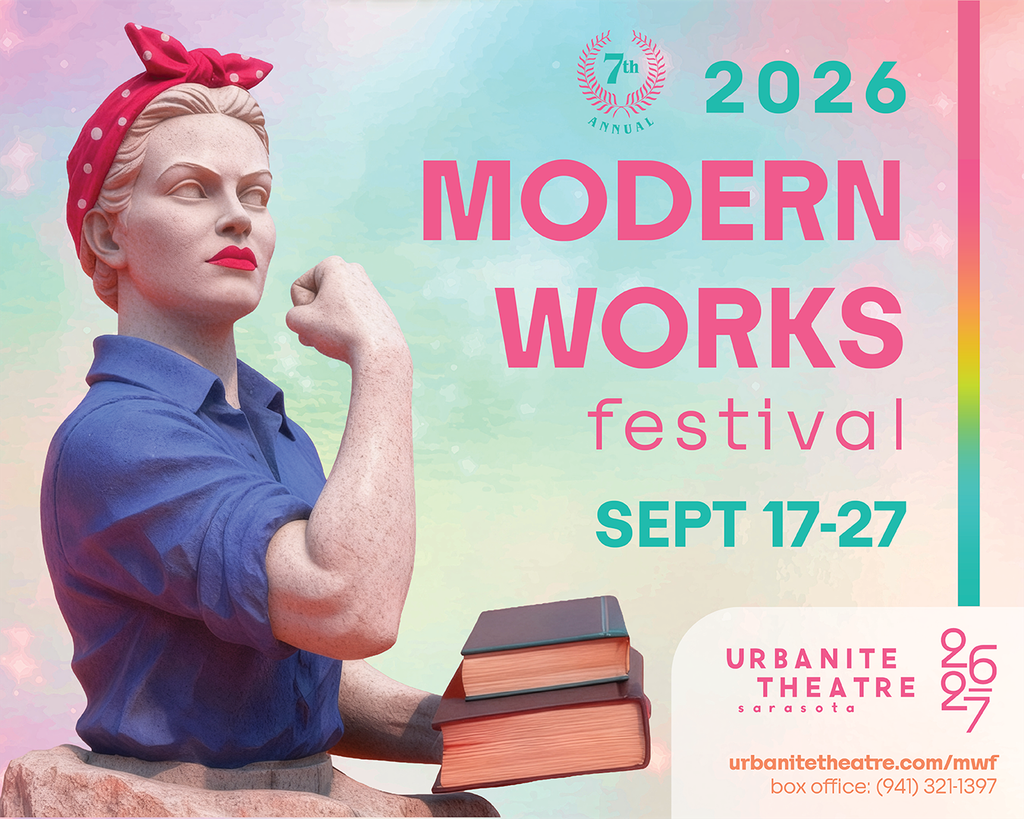
On Saturday, September 26, Urbanite continued its seventh annual Modern Works Festival with staged readings of three finalist plays, including the evening presentation of Conversations by the Beach by Mantra Radhakrishnan. The festival, running September 17–27, celebrates new play development and women in theater, giving playwrights something increasingly precious: an actual stage, professional artists and audiences willing to listen before declaring what a play is supposed to become.
And Sarasota audiences, bless them, are not exactly known for being shy with an opinion.
That may be precisely why this works.
Conversations by the Beach begins with an irresistible premise: three women, 20 years and five beaches. Mona and her daughters, Meenu and Mariam, navigate the aftermath of the family patriarch’s death, encountering grief, liberation and all those complicated family emotions that refuse to fit neatly into the sympathy-card version of loss. Radhakrishnan describes the work as a dramedy incorporating Bharatanatyam movement as it explores growing up, grief and life within a nontraditional family.
In other words, nobody is simply standing around being sad.
Thank goodness.
Because grief is rarely that polite.
It can be funny. Irritating. Liberating. Guilty. Tender. Absolutely infuriating. Sometimes the person whose absence breaks your heart is the very same person whose absence suddenly allows you to breathe.
Now that is interesting theater.
There is also something wonderfully appropriate about setting these conversations against beaches. Beaches have always been sneaky little emotional accomplices. We go to them to celebrate, escape, fall in love, recover, remember people and occasionally make enormous life decisions while staring dramatically at the horizon.
Radhakrishnan stretches that imagery across two decades, allowing the women—and their relationships—to change as the locations change around them.
The inclusion of Bharatanatyam, the classical Indian dance tradition, adds another layer to a work already interested in memory, culture and the ways families communicate beyond straightforward conversation. Rather than presenting family history as a tidy chronological story, the play can move through it emotionally and physically.
And that feels exactly right.
Families do not remember in straight lines.
Neither does grief.
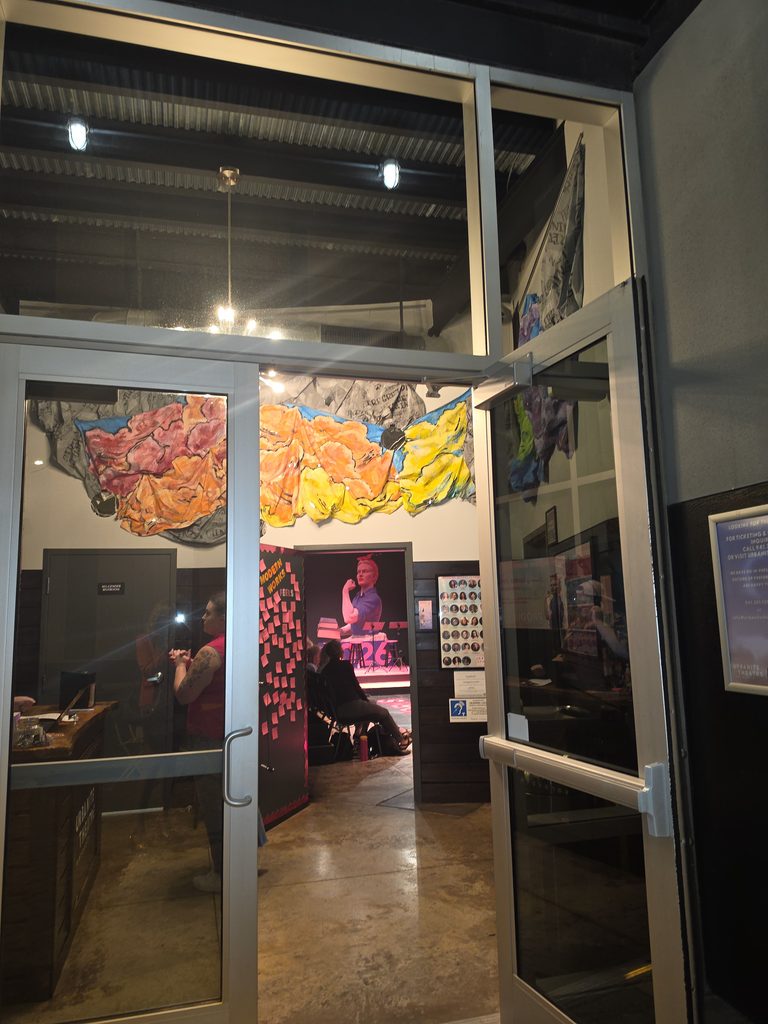
What makes the Modern Works Festival particularly compelling is that audiences encounter these plays as staged readings, not fully produced shows. Urbanite deliberately keeps the emphasis on the writing: actors work with scripts, and the festival format limits elaborate costumes, props and theatrical machinery. The finalists receive professional directors, actors, rehearsal time and post-show discussions as part of the development process.
There is nowhere for a script to hide.
No $40,000 set.
No chandelier dropping from the ceiling.
No fog machine desperately whispering, “Please look over here.”
Just words, performers and an audience.
It is theatrical Spanx removal.
And when the writing works, there is something exhilarating about hearing it this way.
Urbanite has also cleverly made its audience part of the laboratory. Festival passholders can vote for their favorite finalist, and post-show conversations place playwrights and audiences in direct dialogue. Previous Modern Works finalists have later received full Urbanite productions, including The Apiary, Westminster, Ahoy-Hoy and 1999.
So these readings aren’t theatrical leftovers or “almost” theater.
They are where theater starts.
That distinction matters in a cultural city like Sarasota, where audiences have access to polished productions all season long. There is plenty of opportunity to admire the finished product. Modern Works offers something different: the chance to watch ideas getting their fingerprints all over the furniture.
It is intimate.
It is imperfect.
It can surprise you.
And frankly, perfection is wildly overrated.
Conversations by the Beach also reminds us why developing female playwrights remains important—not because women need to be placed into some neatly labeled artistic category, but because the range of stories expands when more voices get the room, resources and permission to experiment.

Mothers. Daughters. Death. Addiction. Freedom. Cultural identity. Family mythology.
Not exactly lightweight beach reading.
And that is the fun of it.
Urbanite Theatre continues to understand something essential: Sarasota audiences do not always need theater to arrive perfectly dressed for dinner.
Sometimes we want to meet it in the kitchen while it is still cooking.
A little messy.
A little unpredictable.
And considerably more interesting.
https://www.urbanitetheatre.com